yardbarker
RealGM Basketball

Utah Jazz BlogUtah Jazz Blog

The Lottery Lowdown

We have seen a whole lot of changes since the pre-Tournament issue of the Lottery Lowdown. March Madness gave us a few players to watch both this year and for 2014 while the Nike Hoop Summit and Combine helped clarify the picture in terms of athletic ability and positional versatility.

The Teams: Who has What (pre-lottery selection order)

  1. Orlando Magic
  2. Charlotte Bobcats
  3. Cleveland Cavaliers
  4. Phoenix Suns
  5. New Orleans Pelicans
  6. Sacramento Kings
  7. Detroit Pistons
  8. Washington Wizards
  9. Minnesota Timberwolves
  10. Portland Trail Blazers
  11. Philadelphia 76ers
  12. Oklahoma City Thunder (Toronto's pick via Houston)- Pick goes back to Raptors if it ends up in the top three
  13. Dallas Mavericks
  14. Utah Jazz 

The Player Pool: Winners and Losers of Early May

Even though the NBA Combine gets most of the attention when it comes to May, one of the other big events that continues to have a major impact is the Nike Hoop Summit. Beyond giving us a glimpse of the following year’s rookies who will play in college, the practices and game give draftniks an excellent chance to look at international players on the court with other high-level talent. This year’s stand out among draft-eligible players was Dennis Schroeder. He looked to have the combination of physical and mental abilities necessary to run an NBA team down the line which sent his stock sky-high and potentially got him a promise in the late lottery.

At the combine, Steven Adams showed a depth and refinement to his game not present during his single season at Pitt. While it is always worrisome when a player who has been underwhelming for a full year looks substantially better in a less realistic and small sample size like the combine, it helps Adams more than most because it shows his dedication to maximizing his ability.

Two of my bloodline favorites, Tim Hardaway Jr. and Shane Larkin, had huge Combine performances. Both player surprised with better than expected athleticism as well as an understanding of the game and attitude that reflects their understanding of what being a professional athlete is all about. Even though neither of them makes my Top 20 below, they are right on the cusp and should be able to contribute early on to their new teams while becoming more complete players with more coaching and experience.

The biggest losers were a pair of shooting guards that needed to justify their pre-season hype. Both Archie Goodwin and BJ Young have athletic ability and enough interesting components in their games to be impact players in the pros but completely underwhelmed during the 2012-13 collegiate season. I am someone who loves players with physical potential and need coaching, yet it gets harder to really risk anything on players when their flashes are deeper in the rear view mirror.

I continue to worry about the possibility of Trey Burke as a starting point guard in the NBA. While we already knew that his size will be below average for the position (especially with the new breed of hyperathletic guys entering the league), his agility was underwhelming and will make it even harder to create for himself and others. Only otherworldly shooters like Stephen Curry have made it work as a starting point guard without either of those tools and that is a big ask of Burke.

Finally, we saw both Cody Zeller and Kelly Olynyk show that they might have to play more PF since they do not have the size to play center full-time. Each of them has enough skill to be fine at power forward for times but true centers are a much rarer commodity and can have much longer careers. Without a much stronger outside shot than either player has shown thus far, they will really need to work to become an important player on a great team.

Preliminary Player Rankings of Draft-Eligible Players

Here is where the players stand as of now.

[NOTE: I include all draft-eligible players regardless of their likelihood to declare for the 2013 Draft. This provides a better measuring stick for everyone and also explains why the list runs to 20 rather than 14.]

  1. Nerlens Noel, C/PF, Kentucky- The physical tools to be a special defender on the interior (and one who rebounds well for his activity as a shot-blocker) and has the potential to be solid but not spectacular on the offensive end. His weight is a concern and absolutely must be improved in order for him to reach that elite level as an interior defender but he appears to have the frame and work ethic to make it happen. Due to positional scarcity and a weak draft class, he sits at No. 1 despite the injury.

    Good Fits: Charlotte, Cleveland, and Phoenix
    Bad Fits: Detroit
  2. Victor Oladipo, SG/SF, Indiana- Oladipo might be the best complementary perimeter prospect to enter the league since Andre Iguodala. His ability to defend the 1, 2 and 3 at the next level comes with an understanding that he cannot and will not be the offensive focal point. Victor’s time at Indiana has done a great job of preparing him for his role at the next level and just about every team could use a player like him even if you need other talent around him in order to thrive.

    Good Fits: New Orleans and Minnesota
    Bad Fits: Orlando and Sacramento
  3. Rudy Gobert, C, France- Could a team really stash a player taken this high in the draft? Probably not even though Jonas Valanciunas serves as at least a partial precedent, so he likely will fall farther than his potential would suggest. I shudder to think at what Gobert can be with the right coaching and talent around him, particularly a PG that can maximize him on the offensive end. It would be legitimately hard to draft him this high since it will take some time for him to hit his stride in the NBA (potentially even the end of his rookie deal) but the juice should be worth the squeeze.

    Good Fits: Washington, Phoenix, Minnesota, and New Orleans
    Bad Fits: Detroit, Utah, and Portland
  4. Alex Len, C, Maryland- Len stands out as a prospect that will benefit greatly from the increase in talent at the next level. Gaining teammates who can both get him the ball and take pressure off him offensively should reduce some of his faults and allow him to use his athletic gifts in a more productive way. Even though it was early in the season, dropping 23 points, 12 boards and four blocks on Kentucky while Nerlens Noel and Willie Cauley-Stein combined for 12, 15 and seven shows what he can do against high-level talent.

    Good Fits: Cleveland, Washington, New Orleans, and Minnesota
    Bad Fits: Sacramento
  5. Otto Porter, SF, Georgetown- As has become quite the theme for this draft class, I am not sure if Porter’s game will translate perfectly to the NBA, but he has the ability to be a meaningful contributor even if he cannot transcend at the next level. Georgetown guys often underwhelm in terms of draft hype thanks to their system so that could work in Porter’s favor as well though I would have liked to see more defensive impact out of him.

    Good Fits: Washington, New Orleans, Cleveland, and Minnesota
    Bad Fits: Portland
  6. Anthony Bennett, PF/SF, UNLV- The least valuable position in the NBA is a non-elite power forward that cannot defend centers because of how many people already in the league can play the part and how frequently new ones come into the fold. Bennett has shown substantially more depth in his game than most freshmen but also had the benefit of being older than most of them as well (he turned 20 on March 14). He makes up for a lack of height with a legit 7’1” wingspan and the unpolished tools to score in a variety of different ways, which has become a necessity for PF’s in the big leagues.  What makes Bennett so fascinating is that he could end up being a new era stretch four in the NBA because of his handle and shot with a little potential to even get some minutes at SF in a pinch. Bennett will contribute early but will need to improve both his strengths and weaknesses in order to stand out at the next level.

    Good Fits: Phoenix, Detroit, and Washington
    Bad Fits: New Orleans and Portland
  7. Dennis Schroeder, PG, Germany- Seeing Schroeder this high may be a surprise but his performance warrants it in this draft class. While the other draft-eligible PG’s have limitations that could move them to a different position or make a bench role the best fit, Dennis should be able to stick as a point guard in the NBA and eventually become a solid starter at a key position. He showed at the Nike Hoop Summit that he can run a team and create offense against elite competition (Andrew Harrison, the PG for the US team, will be a lottery pick in the much stronger 2014 class). Schroeder has the size and court vision to distribute along with the ballhandling and passing to create for others with a jump shot good enough to keep opponents honest. Schroeder still has plenty of work to do on cutting down turnovers, finishing and shooting the NBA three, but those are fixable issues with proper coaching and time.

    Good Fits: Utah, Orlando (not #1, obviously), Sacramento, Detroit, and OKC
    Bad Fits: Portland and Philadelphia
  8. Glenn Robinson, SF, Michigan- It feels a good deal better to make a mistake on an elite athlete and that could end up being the case with Glen III. The son of the Big Dog is not just a physical specimen though, since he also has a pretty good basketball IQ and some intriguing potential as a scorer. That said, he needs to up his effort both mentally and physically to make the most of his ability.
  9. Giannis Adetokunbo, SF, Greece- Some may call him this year’s “International Man of Mystery” since we have seen so little of his game thus far and that criticism is wholly justified. Giannis is special because of his phenomenal athletic profile (7’3” wingspan, respectable speed, and gigantic hands) and instincts for such a young age- he turns 19 in December of this year.  He can handle the ball reasonably well and has remarkable defensive potential. There is an additional risk since we have never seen Adetokunbo play against high-level competition, though it’s not like the other draft-eligible SF/PF’s (Poythress and Tony Mitchell’s freshman years come to mind) impressed when they had the chance. I would not even call Adetokunbo a boom/bust guy because he should be able to contribute even if the flaws in his game never get corrected. He just has insanely high upside while also being incredibly unproven.

    Good Fits: New Orleans, Detroit, and OKC
    Bad Fits: Washington and Minnesota
  10. Steven Adams, C, Pitt- A legitimate surprise at the Combine because he showed depth to his game that we simply have not seen before. Building a jump shot that gets results takes time and effort, which also helps answer one of the biggest criticisms about Adams. He has an NBA body and plays a position where effort and size can allow a player to provide value to the team that drafts him during the rookie deal even as he develops.

    Good Fits: Minnesota, Washington, and Dallas
    Bad Fits: Utah and Detroit
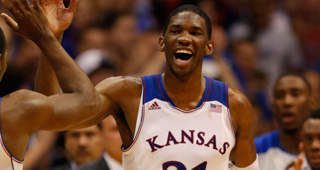
  11. Ben McLemore, SG, Kansas- McLemore is getting a ton of pub right now as a potential top-3 pick, but has the problem of being a dependent talent on offense while not having a major impact on the defensive end. His handle just does not reach the level necessary to make me believe he can generate shots for himself and others at the next level. People have compared him to former AAU teammate Bradley Beal who has come into his own at the end of his rookie year, yet Bradley did a better job creating his own offense than McLemore has at this point. Plenty of potential to be sure, but the holes in his game will make him a very limited player unless and until they can be closed.

    Good Fits: Minnesota and Philadelphia
    Bad Fits: Detroit, New Orleans, and Utah
  12. Willie Cauley-Stein, C, Kentucky- Stop me if you have heard this before: Athletic big man who can defend NBA Centers but needs to get stronger and develop a deeper game in order to make an impact. In a class full of raw center, Cauley-Stein may just be the most raw. One of those guys whose stock could benefit from staying in college, but would have been better off developing in the league and getting to his second contract that much faster.
  13. Shabazz Muhammad, SG/SF, UCLA- I have said for years that the only swingmen (shooting guards and small forwards) who should go high in the draft are those with a meaningful chance of being No. 1 scorers or elite defenders. The revelation about Muhammad's age raises real questions about his ability to get points on “fair” competition and his effort on the defensive end must become more consistent in order for him to become a starter in the league. He still has a great work ethic and the base to become a legitimate NBA player even though there are more questions than there were before.

    Good Fits: Minnesota, Portland, and Philadelphia
    Bad Fits: Utah, New Orleans, and Cleveland
  14. Tony Mitchell, PF/SF, North Texas- In a draft full of middling prospects, it seems worth it to go after one of the biggest boom/bust guys we have seen in years. Mitchell is one of the best athletes in this class and had an absolutely horrendous season. That said, Tony did a good job in the U-19 World Championships where he was the per-minute rebounding leader over guys like Valanciunas and Patric Young who have more established reputations on the boards. If he can put it together, Mitchell could be an NBA starter and/or an important contributor on a strong team and provide both rebounding and defense that is hard to obtain and retain for each and every NBA franchise.

    Good Fits: OKC, San Antonio, and Indiana
    Bad Fits: Utah
  15. Trey Burke, PG, Michigan- As was the case for me with Damian Lillard last season, I am not convinced that Burke will be a long-term starter in the pros. His physical profile will put him at a pretty great disadvantage on both sides of the ball against next level starting competition and all the heart in the world cannot make up some of those gaps. At the absolute worst he will be an awfully fun change of pace guy who gets spot starts and that has a meaningful value in today’s NBA.

    Good Fits: Detroit, Dallas, and Utah
    Bad Fits: New Orleans and Washington
  16. CJ McCollum, SG/PG, Lehigh- After last year’s stunning defeat of Duke in the NCAA Tournament, McCollum started getting the draft hype he had deserved for a little while before after finally developing his game enough to be a legit NBA player. The challenge for CJ is that he does not appear able to run an NBA offense and also does not possess the size to be a reliable off-guard. Fortunately, he can score in bunches sufficiently to make him worth taking, especially since he also generates turnovers on the defensive end.

    Good Fits: Minnesota, Portland, and Dallas
    Bad Fits: New Orleans, Detroit, and Sacramento
  17. Marcus Smart, PG/SG, Oklahoma State- As someone who loves analyzing point guards, there have been few that have given me more fits than Marcus Smart. He has a different physical presence than the freak PG’s that have come into the league recently because he is bigger (height and width) than most of them and also a little bit slower. His activity and desire to play defense is a big help and will provide value to teams even if he has more trouble getting to his desired spot on the court. In all honesty, we could see him more as a two guard defensively which may open up some different doors in terms of teams and fit with the bevy of guys who should be defending PG’s and playing off the ball currently in the Association.
  18. Cody Zeller, PF/C, Indiana- Over the past year, Cody has suffered a little bit from Matt Leinart Syndrome, meaning that draftniks have had another season to tear down his game as an elite prospect in the public eye. The problem is that some of those concerns are legitimate since his short wingspan and slight frame will allow him to be exploited defensively at the next level by Centers while those same limitations could curb some of his talent on the offensive end. Shockingly, his agent tried to spin Cody as a power forward at the Combine which further illustrates Zeller’s potential problems playing the most valuable NBA position. He will need to show a strong shooting stroke to generate anywhere close to the value he had when perceived as a true center. Regardless, Zeller will still be a useful contributor who will make teams sweat when he is on the court.

    Good Fits: OKC, New Orleans, and Dallas
    Bad Fits: Minnesota and Portland
  19. Alex Poythress, PF/SF, Kentucky- Since he was in high school, I have been rooting for Poythress to develop an offensive game that worked for a perimeter player since it would make him an absolute force in the NBA. Unfortunately, that has not happened thus far. However, his combination of size (6’8” or so with a 7’1” wingspan) and athleticism should allow him to be a disruptive force in the pros. His potential to guard both SF’s and PF’s makes him incredibly intriguing in a league looking for players with that type of ability.
  20. Michael Carter-Williams, SG/PG, Syracuse- Despite not being sure that he can run an NBA team as a primary ballhandler or defend NBA point guards, MCW showed in Chicago that he can help out the team that drafts him in other fascinating ways. He has sufficient quickness and size to make SG’s sweat and can provide teams with another level of flexibility given his ball-handling abilities.

    Good Fits: Detroit, Portland, and OKC
    Bad Fits: Philadelphia, Washington, and Minnesota

Al Jefferson Anchors Young Jazz, But Slippage Showing

MILWAUKEE – The Utah Jazz have had painful moments this season out of a partial youth movement while competing for the playoffs, and as a rookie, Al Jefferson was a 20-year-old drafted into the same hybrid situation. Eight years ago, Jefferson was on a Boston Celtics team that won the Atlantic Division behind veterans like Paul Pierce and Gary Payton, with an eye toward nurturing Jefferson and Tony Allen, Kendrick Perkins and Delonte West.

Now, Jefferson finds himself as one of those established vets, a primary piece the Jazz can surround with enough talent to make a playoff run while retooling. He missed his second straight game on Monday night due to a sprained left ankle, and the Jazz are confident the injury isn’t serious but want to be cautious of their leading scorer and rebounder. Even so, Derrick Favors and Enes Kanter combined for 38 points and 25 points in Jefferson’s absence, a 109-108 overtime loss to the Bucks that dropped the Jazz to 32-28.

The Jazz have relied on Favors (21) and Kanter (20) – as well as Gordon Hayward (22) and Alec Burks (21) – as integral players in their rotation, and Ty Corbin admits it has resulted in both saving and hurting parts of the season. That’s the outcome of learning, Corbin says. Jefferson knows his growth took seasons after entering the NBA straight out of high school, but he can also relate to the watching and learning that both Favors and Kanter have had to do over the past two seasons.

“It most definitely took some time, but the good thing about me: I came in with an open mind,” Jefferson told RealGM. “I didn’t come in thinking I was going to play and be a superstar my rookie year. I came in sitting back and just watched and wanted to learn. It came to me more easier that way than in the other way.”

Jefferson has had better statistical seasons than this one, and yet the low post game is coming much smoother to him and he has shed the “blackhole” label. Before he joined the Jazz and the system of first Jerry Sloan and now Corbin, Jefferson was seen as a skilled inside option with the caveat that if the ball was going into him, it probably wasn’t coming back out.

In Jefferson’s mind, the trade from the Minnesota Timberwolves to the Jazz was the best thing that could have happened to his career. He has evolved as a player in three seasons with the Jazz, providing a durable, reliable presence and even helping develop Kanter. The losing that Jefferson went through with the Timberwolves still irritates him, understanding at the same time that it led him to where he is now.

“In Minnesota three years there, [we] lost and had three very bad losing seasons, and then I came to Utah,” Jefferson said. “And just how the [Jazz] do things as far as on and off the court, how they teach their players not only to be a great basketball player but to be a great man in life off the court, I just think at that point in time, that’s what I needed – for me to mature as a person and as a player.

“[Karl Malone and John Stockton] let you know that the Jazz were a winning team and they always have been and always want to be. … To be a part of last year’s [playoffs] and be one of the leaders on the team, it was a hell of an accomplishment.”

The Jazz set the foundation for their future with last year’s playoff berth, when they went 36-30 in the regular season before the San Antonio Spurs swept them. It allowed expectations to heighten a little this season, but they have had to work through inconsistent play at times and a torn ligament in Mo Williams’ right thumb.

Williams is slated to participate in a full contact practice on Tuesday and then determine whether he will return Wednesday in Cleveland against his former team. In the meantime, the Jazz had too many miscues, too many defensive lapses, to overcome on Monday – turning the ball over 21 times, six of which by Burks who played almost all his 35 minutes at point guard, and giving up a Brandon Jennings three-pointer to send the game to overtime.

Suddenly, the Jazz have lost four of their past five games, the Lakers have won four of their last five, and Los Angeles finds itself just two games away from Utah for the eighth seed in the Western Conference.

“It’s a little painful losing these kinds of games, especially at this time of season, but great things will happen going forward if you get the lesson now,” Corbin said. “Sometimes, lessons are painful.”

Jefferson never doubted that he would remain part of the Jazz’s learning process this season, and he was confident he wouldn’t be moved at the trade deadline. One more NBA season, one more February when Jefferson heard his name thrown around, his name intriguing teams.

“I know how to handle it, because nine out of 10 [times], nothing ever happens,” Jefferson said. “And once again, nothing happened this year either. I never think about it, never let it get to me and never listen to the media at all because of that reason.”

As he’ll enter free agency this summer, Jefferson made it clear he’s focused on closing out this season, locking up a playoff berth. Nevertheless, the Jazz were shown yet again on Monday that Favors and Kanter are the future big men up front, that they might not be inclined to re-sign Jefferson and Paul Millsap.

“I’ll cross that bridge when I get there. … I know both sides, me and Utah, are going to do what’s best,” Jefferson said. “Utah is going to do what’s best for the team and I’m going to do what’s best for my family.”

Once, Jefferson was a high schooler part of the Celtics’ infusion of youth with veterans. He lived through grueling, challenging years of growth, when experience brought maturity. Jefferson is on the other side all these years later, as a veteran leader with an imperative goal while the Lakers finally start to apply pressure: get your team to the postseason.

How Many Players Teams Acquire At Each Trade Deadline On Average

We pulled our Team Transactions Data over the previous 10 Trade Deadline periods to examine the levels of activity in period leading up to the deadline.

The below is an annual average of the number of players acquired by each team (click on any of the below links to see a year-by-year infographic).

Sacramento Kings: 2.7
New York Knicks: 2.3
Houston Rockets: 2.2
Oklahoma City Thunder: 1.8
Cleveland Cavaliers: 1.7
New Orleans Hornets: 1.7
Denver Nuggets: 1.6
Memphis Grizzlies: 1.6
Charlotte Bobcats: 1.6
Atlanta Hawks: 1.5
Brooklyn Nets: 1.5
Milwaukee Bucks: 1.5
Portland Trail Blazers: 1.5
Chicago Bulls: 1.4
Golden State Warriors: 1.3
Boston Celtics: 1.2
Orlando Magic: 1.2
Los Angeles Clippers: 1.1
Phoenix Suns: 1.1
Washington Wizards: 1.1
Dallas Mavericks: 1.0
Minnesota Timberwolves: 1.0
Toronto Raptors: 0.9
Philadelphia 76ers: 0.8
Utah Jazz: 0.7
Indiana Pacers: 0.6
Los Angeles Lakers: 0.6
Miami Heat: 0.6
Detroit Pistons: 0.5
San Antonio Spurs: 0.5

The following are the collective breakdowns by year:
2003: 14
2004: 36
2005: 48
2006: 44
2007: 22
2008: 45
2009: 45
2010: 51
2011: 51
2012: 29 

Millsap's Present And Future

With the Jazz in a transition era and Paul Millsap’s contract ending at the end of the season, there’s uncertainty if this is his final season in Salt Lake City. Millsap spoke with RealGM about the direction of the Jazz franchise and his plans for free agency in the summer of 2013.

Leroux's 2012-13 NBA Tier Predcitions

While the drop-off from the Heat to the rest of the Eastern Conference is severe, the Lakers, Spurs and Thunder have quick company in the second and third tiers.

Everything On The Table For Raja Bell, Jazz

The Jazz have long decided that Raja Bell is out of their plans, to which Bell has responded by saying he’s on board with the organization’s rebuilding plan but just wants to head to a team where he’d be utilized properly.

Leroux's 30-Team Offseason Review

The Nuggets, Lakers, Heat, 76ers and Nets were amongst the teams with great offseasons, while the Bucks, Magic, Suns, Knicks, Cavaliers and Bulls were in the bad column. Here's how all 30 teams have fared in the 2012 offseason.

Team-By-Team Gold Medal Winners

The Jazz and Thunder have had the most Gold Medalists since the USA began bringing NBA players in 1992, while Duke leads amongst colleges. How do the other 29 NBA teams rank?

Team-By-Team Top Position Needs

Center represents the position of greatest need for nearly half the NBA, while power forward isn't the top priority for a single team.

Notes From 2012 NBA Draft Media Day

Polling the Green Room candidates to determine who they think will be the second best player of the class, the rise of skinny guys, a new Harrison Barnes and which team workout was the toughest.

The First Round Rundown

The first round begins this weekend, when eight best-of-seven series featuring sixteen teams commence. There’s no way to watch all of the games, so here’s a viewer’s guide for the ones to watch and the ones to skip:

RealGM's NBA Awards For 11-12

The MVP goes to the far and away best player in the NBA, while the Knicks have two players honored. The Cavaliers, Thunder, Celtics and Jazz also take hardware.

The Genius Of Kevin O'Connor

Two years ago, Utah was a capped-out veteran team with a frustrated star eyeing free agency. Now, thanks to Kevin O’Connor’s shrewd long-term planning, they have one of the NBA’s most promising young core all while remaining in playoff contention.

Mid-Season Power Rankings (A Full Look At All 30 Teams)

While the Heat, Bulls and Thunder are positively in the NBA's elite, the Clippers, Mavericks, Spurs, Lakers, 76ers, Pacers, Blazers, Hawks and Magic comprise a deep pack of also-rans who could be a deal away.

NBA Power Rankings (Feb. 16th)

The Clippers have elevated past several rivals to have the highest FIC differential per game in the Western Conference.

2012 Rising Stars Challenge Mock Draft

The new format for the Rising Stars game provides some incredibly fun possibilities for discussion, argument and comedy.

Europe Interview: Andrei Kirilenko Of CSKA Moscow

Andrei Kirilenko is the leading candidate for Euroleague MVP as he attempts to lead CSKA to another title and while he has no regrets about staying in Russia for the current season, he is excited to return to the NBA in the summer.

NBA Power Rankings (Jan. 26th)

The gap between the 76ers and everyone else (mainly the Bulls) continues to narrow, while the Thunder have surged.

Brandon Knight Seeks Wins Over Payback For Draft Slide

Brandon Knight never had an issue with joining the Pistons, but rather how teams like the Jazz and Raptors passed on selecting him.

Leroux's 2011 Draft Review

Great Drafts, Good Drafts, Enh Drafts and Bad Drafts.. Did your team improve or squander an opportunity?

Older Blog Posts »


Basketball Wiretap Headlines

    NBA Wiretap Headlines

      NCAA Wiretap Headlines

        MLB Wiretap Headlines

          NFL Wiretap Headlines

            NHL Wiretap Headlines