May 05, 2013 11:03 PM EDT 
Today I present my lineup-based model’s projections for the Big Ten in 2013-2014. While the top of the Big Ten remains strong, the league lacks the depth it had last season.
As always, these won’t necessarily be the final numbers. Last week I presented my model’s projections for the ACC and already two teams have meaningfully improved. First, Wakes Forest added a three point-shooting specialist in Robert Morris transfer Coron Williams. Williams will be eligible immediately as a graduate school transfer and should instantly upgrade the Wake Forest offense. Meanwhile, Miami added Kansas St. transfer Angel Rodriguez and he may be able to get a family hardship waiver to play next year.
Of course it isn’t clear whether Rodriguez should play next year for Miami. Even if he plays, Miami is still going to be behind NC State in my projections and well outside the NCAA bubble. (While the Wolfpack have more talent, Jim Larranaga is the better coach which puts Miami in striking distance of NC State.) That might suggest Miami should save Rodriguez until the following season. On the other hand, Rodriguez has two years of eligibility left and the young Miami players might develop better with a true PG on the floor. Thus it may be worth getting Rodriguez on the court next season even if the NCAA tournament is out of reach.
|
Team
|
Proj CW
|
Proj CL
|
Proj Off
|
Proj Def
|
Last Off
|
Last Def
|
T100
|
Ret Min
|
Ret Poss
|
|
Michigan St.
|
14
|
4
|
117.0
|
87.6
|
112.4
|
86.5
|
8
|
83%
|
83%
|
|
Michigan
|
12
|
6
|
117.4
|
92.2
|
122.6
|
92.3
|
6
|
62%
|
53%
|
|
Wisconsin
|
12
|
6
|
112.8
|
88.7
|
107.6
|
83.5
|
3
|
57%
|
54%
|
|
Ohio St.
|
12
|
6
|
108.6
|
86.3
|
115.1
|
87.3
|
6
|
74%
|
68%
|
|
Iowa
|
12
|
6
|
114.7
|
91.1
|
109.3
|
89.9
|
2
|
88%
|
92%
|
|
Indiana
|
9
|
9
|
110.4
|
93.1
|
121.0
|
88.6
|
7
|
32%
|
30%
|
|
Purdue
|
8
|
10
|
109.2
|
93.5
|
106.2
|
94.5
|
4
|
64%
|
70%
|
|
Illinois
|
8
|
10
|
108.2
|
92.9
|
109.5
|
92.7
|
5
|
43%
|
43%
|
|
Minnesota
|
8
|
10
|
107.9
|
92.7
|
113.8
|
92.7
|
0
|
63%
|
63%
|
|
Penn St.
|
6
|
12
|
106.9
|
98.0
|
100.7
|
98.9
|
0
|
71%
|
82%
|
|
Northwestern
|
4
|
14
|
101.9
|
96.7
|
102.5
|
99.7
|
0
|
61%
|
62%
|
|
Nebraska
|
3
|
15
|
100.3
|
97.6
|
100.8
|
97.7
|
0
|
60%
|
52%
|
For the definition of column headings, click here.
Michigan St.: Derrick Nix posted surprisingly low block numbers for a post-player last season and Adreian Payne was by far the better defensive rebounder. Thus the model doesn’t project a major defensive drop-off for the Spartans.
The departure of Nix may also make the offense run more smoothly. With Nix departing Branden Dawson will get a chance to play more minutes at the power forward spot which I truly believe is his natural college position. When Dawson played more minutes on the perimeter last year, his offensive rebounding numbers slipped.
Michigan: Mitch McGary, Jordan Morgan, Glen Robinson, Nik Stauskas, and super PG recruit Derrick Walton mean Michigan will be a Top 10 team nationally again.
Wisconsin: As of May 5th on Verbal Commits, Wisconsin has 14 players on scholarship for next year. Did the Badgers actually over-sign? Is this the sign of the apocalypse? According to Twitter the answer is no. One of the walk-on freshman was given a free ride last year.
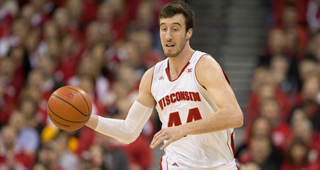
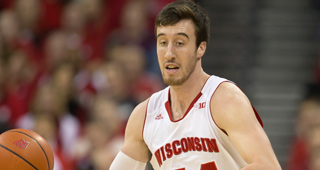
With Josh Gasser, Ben Brust, Traevon Jackson, Frank Kaminsky, and Sam Dekker, Wisconsin should have a dominant offense again, even if the defense takes a bit of a hit with the loss of so many quality post players. And as always with Wisconsin’s depth, they can bring Top 100 freshman Nigel Hayes along slowly and limit his mistakes. Of course we all expect Wisconsin to dominate the regular season and disappoint again in the tournament. That is what Bo Ryan does.
Ohio St: I think most experts are overrating the Buckeyes because they are overlooking how important DeShaun Thomas was to the Ohio St. offense last season. The same people who expect Georgetown to fall off the map without Otto Porter don’t seem to be dropping the Buckeyes much at all. But Thomas was responsible for a much larger portion of the Ohio St. offense. With all the key defensive players back, the model thinks Ohio St. will have the best defense in the nation. But the offense will probably struggle at times next season.
Iowa: Aaron White and Roy Marble are already stars. Mike Gesell and Adam Woodbury were Top 100 recruits out of high school and both should make a significant sophomore year leap. Plus Josh Oglesby should bounce back from a subpar season. Oglesby shot 37% from three two years ago, but only 27% last season. And with virtually the entire rotation coming back, Iowa won’t have to break in a bunch of new freshmen. Overall that is a formula for an offense that should be substantially improved. This is the season Fran McCaffery finally breaks into the top of the Big Ten.
Indiana: I may have the most pessimistic projections in the nation for Indiana next year, but let me explain what the model is thinking. Essentially everyone who has Indiana in the Top 25 is saying this, “Well they aren’t going to fall that much. They still have some talented players coming in. They’ll still be pretty good.” But having talented players doesn’t ensure anything. What allows coaches to reload and stay in the Top 25 is teaching elite defense to young players. The reason Kansas is projected as a Top 25 team has everything to do with the defense. And Tom Crean doesn’t have a great defensive track record. His only elite defensive teams have come when he has had veteran squads at Indiana and Marquette. He isn’t that good at getting young players to play great defense immediately.
And anyone who studies college basketball closely realizes that even teams with loads of talent can take time to gel offensively. Look no further than North Carolina last year. They were 11th in last year’s AP preseason poll because they were loaded with Top 100 recruits. But I had the Tar Heels 26th in my preseason rankings and they finished with the 30th best margin-of-victory numbers in the nation. The reality is, if you are going to rely on recruits outside the Top 20 (and only Noah Vonleh is a Top 20 recruit,) it usually takes time for those players to figure out the college game.
Even the late transfer of Remy Abell hurts. While Abell didn’t seem to do much against good teams last year, he did show signs of an outside shooting touch. Abell’s departure drops Indiana to a .500 team in my model. The future is still bright for the Hoosiers, especially in 2014-2015. And Indiana will likely be a tournament team in 2013-2014. But I disagree with folks who have the Hoosiers in their Top 25.
Purdue: After Indiana, I am rather pessimistic about the rest of the league. While most of the teams have smart coaches who will get their teams to play good enough defense to be competitive, the talent difference between the top and bottom of the league is pretty significant.
The best news for Purdue is that the Boilermakers gave fully 44% of their minutes to freshmen last year. That investment in young players should pay off this season. Most notably, tons of prognosticators are in love with AJ Hammons potential. Clearly many of the freshmen mistakes that plagued the team last season should be eradicated this year.
But this team simply lacks the depth to compete with the top teams in the league on a consistent basis. The slew of recent transfers is actually a bit of mixed bag in that regard. Even if Anthony Johnson and Jacob Lawson had returned, that wouldn’t have helped a lot. Anthony Johnson improved his free throw shooting last year, but still struggled mightily with his shot, posting an ORtg of 89. And Lawson basically never put up shots. Thus the loss of those two players isn’t major. But the transfer of Sandi Marcius will matter. Even if Hammons is the future of the team, Marcius would have provided needed depth in the paint. And on a roster full of improving young players, but plenty of question marks, the loss of a dependable option is costly.
The model also assumes some improvement for the Purdue defense based on Matt Painter’s early career success. But the defense has been trending in the wrong direction in recent seasons, and if that continues, Purdue could finish even lower in the standings.
Illinois, Minnesota, and Penn St.: Let’s start with the offenses. For all three teams the backcourt will be the strength. Penn St. probably has the best back-court with Tim Frazier (returning from injury), DJ Newbill, and Jermaine Marshall. But Minnesota’s unit will also be strong. Andre Hollins, Austin Hollins, and Joe Coleman all played well at times last year. Illinois’ backcourt will be the weakest, but Tracy Abrams, Joseph Bertrand, and Drake transfer Rayvonte Rice (a high volume shooter who should be more efficient in a more limited role) will still be quality Big Ten players.
But the differences are much more notable in the front-court. Penn St.’s offensive options in the post are pitiful. Ross Travis is probably the best option, but his 87 ORtg last year was dreadful. And none of the Nittany Lions other post options were even three star athletes out of high school. Certainly Penn St. will be as perimeter-oriented as possible next season, but the front-court looks like a huge offensive liability.
Minnesota brings back Elliot Eliason who had moments last year, but who shot so little he cannot be counted on to carry the load. And while Mo Walker continues to have potential, after missing a year and a half with injury, he struggled last season. And that means plenty of minutes for the highly inefficient Oto Osenieks or unranked recruit Charlie Buggs who red-shirted last season.
And suddenly here is where Illinois stands out. Nnanna Egwu isn’t a star by any means, but he had more offensive game last year than any of Minnesota or Penn St.’s post-players. And Illinois St. graduate school transfer Jon Ekey is one of those sneaky useful pickups. He didn’t score a lot last year, but he was super-efficient, and he also has an outside game. Ekey actually made 59 threes two years ago while shooting 40% from deep. Ekey and the improving Myke Henry will play a lot of stretch-4 minutes for Illinois next season.
Thus while none of these teams have great front-courts, Illinois can expect the most offense from its front-court, and Penn St. can expect almost nothing, which is why you see the offensive prediction you see above.
On defense Penn St. was miserable last season and without any true post options, expect more of the same. Illinois should drop-off some, but don’t expect a huge drop-off. The departing Sam McLaurin and Tyler Griffey were dreadful defensive rebounders. Minnesota is the real wild-card here, as it is a bit hard to project how Richard Pitino will do in his first season.
Final Note: I mentioned on Twitter a few weeks ago that Illinois was a 6-12 team. But the addition of Jon Ekey really is a big deal in the lineup based model. Instead of needing to rely on unranked recruits Austin Colbert and Maverick Morgan to play major minutes in the post as freshmen, with Ekey available Illinois can break those two players into the lineup more slowly.
Northwestern: Even if Bill Carmody had kept his job, this was going to be a different Northwestern team this year. With the teams three most efficient players graduating, there simply were not going to be enough great outside shooters to run the offense Carmody loved. (To some degree, there were not a lot of great outside shooters last year. It was Northwestern’s worst three point shooting season since 2007.) So Northwestern was going to have to try to re-invent itself around the plethora of “project” big men on the roster. New head coach Chris Collins at least has the luxury of an established point-guard and he welcomes Drew Crawford back for a fifth season of eligibility. But beyond those two players, basically everyone else is projected to have an ORtg below 100. And that means Collins has his work cut out for him. I truly believe Collins will get Northwestern to the NCAA tournament. But give him some time to bring in his players.
Nebraska: Nebraska returns just 52% of its possessions from last year which should slow the momentum Tim Miles was building late in the season. JUCO transfers Leslee Smith and Deverell Biggs, Texas Tech transfer Terran Petteway, and Florida transfer Walter Pitchford should add some experience which might help a little. But none of them would start for a good team in the Big Ten. (Petteway had a hideous 75 ORtg in limited minutes for Texas Tech. I remember watching him two years ago and thinking that he had no idea what a good shot was. Perhaps that is correctable, but he was still dreadful.) Realistically, this is still the beginning of the rebuilding project. Tim Miles needs to give a lot of minutes to his young players next year and build for 2015-2016.
Branden Dawson, Mike Gesell, Adam Woodbury, Michigan State Spartans, Michigan Wolverines, Wisconsin Badgers, Iowa Hawkeyes, Ohio State Buckeyes, Indiana Hoosiers, Purdue Boilermakers, Illinois Fighting Illini, Minnesota Gophers, Penn State Nittany Lions, Northwestern Wildcats, Nebraska Cornhuskers, NCAA Apr 08, 2013 12:17 AM EDT
Last fall on Basketball Prospectus I introduced the first ever lineup-based predictions model. Even -though I intend to make improvements to the model over the summer, since I already have the programming code written, today I wanted to rerun the first version of the model and see what it tells us about the 2013-2014 season.
The biggest problem is guessing which players will declare for the draft. I haven’t seen an official announcement for Nerlens Noel or Shabazz Muhammad, but I think it is clear they are both leaving. I also assume that anyone who can make this year’s lottery would be foolish not to leave. Thus I assume Ben McLemore, Marcus Smart, Victor Oladipo, Otto Porter, and Trey Burke are gone. Michael Carter-Williams never struck me as an obvious lottery choice this year, but the consensus seems to be that the scouts like his size and NCAA tournament play, so I project him as leaving. Similarly a slew of big guys seem likely to go pro from Gorgui Dieng, to Cody Zeller, to Alex Len, to Kelly Olynyk.
Notably, I’m not going to assume Doug McDermott and Russ Smith come back. I understand there isn’t much more they can accomplish in college, but based on the draft projections I have seen, neither player is guaranteed to be a first round pick right now. I think that if you are not certain to get a guaranteed contract in the NBA, the risk of leaving is pretty high. Thus I’m going to assume these players return, even though that may be a dubious conclusion.
|
Rank
|
Team
|
Conf
|
Pred Off
|
Pred Def
|
Pred Pyth
|
Ret Min
|
Ret Poss
|
T100
|
Last Pyth
|
|
1
|
Kentucky
|
SEC
|
120.8
|
92.5
|
0.9391
|
44%
|
43%
|
10
|
0.8171
|
|
2
|
Michigan St.
|
B10
|
114.1
|
87.6
|
0.9374
|
83%
|
84%
|
8
|
0.9361
|
|
3
|
N. Carolina
|
ACC
|
115.9
|
89.0
|
0.9371
|
86%
|
88%
|
11
|
0.8676
|
|
4
|
Louisville
|
AAC
|
110.9
|
86.0
|
0.9314
|
72%
|
72%
|
7
|
0.9767
|
|
5
|
Florida
|
SEC
|
110.5
|
86.6
|
0.9246
|
57%
|
54%
|
9
|
0.9696
|
|
6
|
Michigan
|
B10
|
115.7
|
91.2
|
0.9193
|
79%
|
71%
|
6
|
0.9467
|
|
7
|
Arizona
|
P12
|
113.4
|
90.8
|
0.9070
|
56%
|
52%
|
9
|
0.9089
|
|
8
|
Marquette
|
BE
|
113.9
|
92.4
|
0.8945
|
61%
|
64%
|
7
|
0.8744
|
|
9
|
Duke
|
ACC
|
111.6
|
90.6
|
0.8939
|
58%
|
50%
|
10
|
0.9441
|
|
10
|
Wisconsin
|
B10
|
108.1
|
88.1
|
0.8900
|
58%
|
55%
|
3
|
0.9308
|
Key:
Pred Off, Pred Def, Pred Pythag: The predicted points scored and allowed per 100 possessions, and predicted winning percentage against an average D1 team on a neutral floor.
Returning Minutes, Possessions: The loss of high possession players can be a larger detriment to the offense, thus I list percentage of returning possessions in addition to returning minutes.
T100: Number of players who were Top 100 recruits out of high school. People focus on Top 100 freshmen, but Top 100 players are also more likely to become breakout stars later in their career.
Last Pythag: Last year’s Pythagorean winning percentage according to Kenpom.com. This is essentially a measure of each team’s margin-of-victory in 2012-13.
Kentucky: The Wildcats have the most talent by far, and the most NBA potential, by far. The only question is time. Can John Calipari teach such a wide array of talent to play together in one year? In three of his four years, John Calipari has managed to get the Wildcats to play elite defense. The model hedges its bets and says the defense might not come together that quickly. (The fact that defense-lacking Kyle Witjer is still going to play meaningful minutes is also a concern.) But with all those Top 20 recruits, and all those highly ranked returning sophomores, it is very hard to predict anything other than a special offensive team.
Michigan St.: I’m assuming Gary Harris is coming back based on Tom Izzo’s comments. When a Top 10 Big Ten squad returns basically all its key players, it is hard not to have high expectations. Kenny Kaminski will be healthy. Denzel Valentine and Matt Costello both remain high potential guys who should see a sophomore leap in efficiency. And Harris, Keith Appling, Branden Dawson, and Adreian Payne are as good a returning set of four starters as you will find. Michigan St. might not be the most talented team in the country, but they have fewer lineup questions than just about anyone.
North Carolina: The Tar Heels will be back. The two biggest lineup issues this year were point-guard and one of the forward slots. We already saw glimpses of point guard Marcus Paige’s improved play late in the year and he should be a star in year two. I can’t tell you exactly who will develop as a post compliment to James McAdoo, but someone will. Whether it will be freshman Isaiah Hicks or Kennedy Meeks, or (after a summer of working out in the gym) Brice Johnson or Joel James, the Tar Heels have four former elite high school post players to choose from. At least one of them will be ready. Overall, North Carolina has more Top 100 talent than anyone else.
Louisville: With players like Montrezl Harrell playing well in limited time this year, Louisville has a chance to go to the Final Four again. But this high ranking depends on Russ Smith’s return. Without Smith, the team will be putting a heavy burden on incoming freshman point guard Terry Rozier. Rozier isn’t in this year’s ESPN’s Top 100 because he needed a year of prep school, but he was a consensus Top 100 recruit last year. RSCI had him 75th.
Florida: Don’t be scared away because the Gators return only 54% of their offense from last year. The Gators add two instant impact recruitsin Kasey Hill and Chris Walker, along with two transfers who were former Top 100 players, Damontre Harris and Dorian Finney-Smith. If the point-guard Hill lives up to his hype, Florida might be even better than last year. They will certainly be deeper.
Michigan: The further development of Mitch McGary, Glen Robinson, and the addition of another stellar recruiting class should help overcome the loss of Trey Burke. But if additional players declare for the draft, Michigan’s expectations could slip.
Arizona: My gut tells me Arizona may be a little too low here. Arizona loses a lot of production, but they have the right pieces coming in. Point guard TJ McConnell was phenomenal at Duquesne and unlike Mark Lyons, McConnell is more of a natural PG. Aaron Gordon and Rondae Hollis-Jefferson should be instant-impact recruits. And the returning sophomores on the front line should be better in year two. The model is mostly concerned whether Sean Miller can bring together an elite defensive team. Last year was Miller’s best defensive team yet, but it still wasn’t an elite defensive team. Until Miller gets his team to play great defense for a full season, there will always be reasons to be skeptical.
Marquette: Vander Blue, Davante Gardner, and Jamil Wilson are back. Buzz Williams has his best recruiting class yet, and the team should have more Top 100 talent than it has ever had in his tenure. Plus Buzz Williams gets the most out of his players by studying the data and eliminating bad possessions. Still, even if the model likes Marquette as a top 10 team, I am concerned that Williams typically has a short-leash with his freshmen. And if they don’t contribute, Marquette may still lack the talent to be an elite team.
Duke: Quinn Cook hasn’t been dominant yet, but he was a Top 10 recruit out of high school, and he is still a high potential player. Andre Dawkins should return from his sabbatical and paired with Rasheed Sulaimon on the perimeter, the Duke back-court looks strong. In the front-court, Amile Jefferson was a solid offensive player when filling in for Ryan Kelly and Jabari Parker is an instant impact recruit. And don’t overlook Mississippi St. transfer Rodney Hood. Duke loses a lot, but the lineup still looks dominant.
Wisconsin: Once again, a model based on the tempo free numbers loves Bo Ryan’s squad. I’m skeptical, but the lineup does look legitimate next year. Remember Josh Gasser is coming back after missing all of last year with an injury. The team’s most important scorer Ben Brust is back. Frank Kaminsky played well in limited minutes. And most importantly, Sam Dekker might be the best post player Bo Ryan has ever had. Seriously, the Badgers lose 45% of their possessions from last year, and the tempo free model still loves them.
Click here for Teams 11 to 25.
Gary Harris, Kentucky Wildcats, Michigan State Spartans, North Carolina Tar Heels, Louisville Cardinals, Florida Gators, Michigan Wolverines, Arizona Wildcats, Marquette Golden Eagles, Duke Blue Devils, Wisconsin Badgers, NCAA Mar 27, 2013 10:49 PM EDT Despite another Top 10 efficiency season, Wisconsin once again fell short of the Final Four. Personally, I’ve reached the point where I will never trust the Badgers enough to pick them in my own bracket. But I think it is worth noting the math for a moment. Because of the one-and-done nature of the NCAA tournament, even good teams often fall short. According to Ken Pomeroy's formula, Wisconsin’s pre-tournament odds of reaching the Final Four were 12.8% this year. I think this is pretty typical for the Badgers under Bo Ryan. They always have great Per Possession numbers, but don’t always get a great seed. For simplicity, assume they’ve had a 10% chance of making the Final Four each of the 12 years under Bo Ryan. Then the odds of coming up short of the Final Four for 12 years are 0.9^12=28%. In other words, even if Bo Ryan is a great coach and the Badgers have had dominant teams for over a decade, random chance could easily explain why Bo Ryan hasn’t gone to the Final Four yet.
I still find myself looking for additional explanations. Does a system based on making fewer mistakes than your opponent fail when you get into the tournament and every opponent is playing fundamentally sound basketball? Is Top 100 talent more important in the tournament than in the regular season? Does the slow tempo mean that even if Wisconsin is better, they do not have enough possessions to pull away from their opponents? Does the dependence on outside shooting make the Badgers less consistent? All of these things are probably true to some degree. But it is also quite possible that Bo Ryan has just had a string of bad luck.
As I noted on Friday, I don’t know how you can knock Bo Ryan for what the Badgers accomplished this season. It truly took outstanding coaching for a team with no true point-guard to beat Indiana and Michigan twice and finish in the Top 4 in the Big Ten again. But I feel like I need to run the next table every year until Bo Ryan finally makes the Final Four. Here are the coaches with the best average Points Per Possession stats over the 11 years Ken Pomeroy has been tracking the numbers. Remarkably, despite having the 7th best efficiency margin, Bo Ryan has yet to make the Final Four. Jamie Dixon and Mark Few also show up high on this list and both had unexpectedly early exits in the tournament again too.
|
Active Coaches
|
Last 11 Years
|
|
Rank
|
Coach
|
Current Team
|
Avg Off
|
Rank
|
Avg Def
|
Rank
|
Final Fours
|
|
1st
|
Bill Self
|
Kansas
|
116.7
|
4th
|
86.4
|
1st
|
2
|
|
2nd
|
Mike Krzyzewski
|
Duke
|
118.5
|
1st
|
88.5
|
3rd
|
2
|
|
3rd
|
Roy Williams
|
North Carolina
|
118.1
|
2nd
|
89.0
|
6th
|
4
|
|
4th
|
Thad Matta
|
Ohio St.
|
116.0
|
6th
|
89.6
|
7th
|
2
|
|
5th
|
Billy Donovan
|
Florida
|
118.1
|
3rd
|
91.8
|
17th
|
2
|
|
6th
|
John Calipari
|
Kentucky
|
115.1
|
10th
|
88.8
|
5th
|
3
|
|
7th
|
Bo Ryan
|
Wisconsin
|
114.7
|
12th
|
88.7
|
4th
|
0
|
|
8th
|
Rick Pitino
|
Louisville
|
113.1
|
17th
|
87.5
|
2nd
|
2
|
|
9th
|
Jamie Dixon
|
Pittsburgh
|
116.3
|
5th
|
91.4
|
15th
|
0
|
|
10th
|
Tom Izzo
|
Michigan St.
|
114.7
|
13th
|
90.4
|
9th
|
3
|
|
11th
|
Jim Boeheim
|
Syracuse
|
115.0
|
11th
|
91.1
|
12th
|
1
|
|
12th
|
Rick Barnes
|
Texas
|
115.2
|
9th
|
91.8
|
16th
|
1
|
|
13th
|
Mark Few
|
Gonzaga
|
115.5
|
8th
|
94.3
|
36th
|
0
|
|
14th
|
Bruce Weber
|
Kansas St.
|
111.5
|
31st
|
90.9
|
11th
|
1
|
|
15th
|
Bob Huggins
|
West Virginia
|
112.2
|
23rd
|
91.8
|
18th
|
0
|
|
16th
|
Jay Wright
|
Villanova
|
112.4
|
21st
|
92.0
|
20th
|
1
|
|
17th
|
John Thompson III
|
Georgetown
|
112.9
|
18th
|
92.6
|
23rd
|
1
|
|
18th
|
Mike Brey
|
Notre Dame
|
116.0
|
7th
|
96.1
|
69th
|
0
|
|
19th
|
Matt Painter
|
Purdue
|
109.8
|
43rd
|
91.3
|
14th
|
0
|
|
20th
|
Mike Montgomery
|
California
|
111.9
|
26th
|
93.7
|
29th
|
0
|
With the new Big East officially announcing which teams would be joining the conference (Butler, Xavier, and Creighton), with George Mason leaving the CAA for A10, and with the renamed Big East (TBA in the table below) adding East Carolina and Tulsa, I think it is time to re-evaluate the future strengths of the various leagues. In the following table, I calculate the recent historical strength of each program. (I calculate the average Pythagorean Rating over the past 11 years for each D1 team.) Then I average this value for each conference in order to try to assess the basketball strength of each league. I do this based on membership this year, next year, and the following year.
|
Conf
|
2012-2013
|
2013-2014
|
2014-2015
|
|
ACC
|
0.8130
|
0.8303
|
0.8354
|
|
B10
|
0.7984
|
0.7984
|
0.7898
|
|
BE
|
0.8026
|
0.7896
|
0.7896
|
|
SEC
|
0.7850
|
0.7850
|
0.7850
|
|
B12
|
0.7848
|
0.7848
|
0.7848
|
|
P12
|
0.7533
|
0.7533
|
0.7533
|
|
TBA
|
|
0.7205
|
0.6543
|
|
MWC
|
0.6648
|
0.6407
|
0.6407
|
|
MVC
|
0.6471
|
0.6304
|
0.6304
|
|
A10
|
0.6437
|
0.6087
|
0.6087
|
|
WCC
|
0.5688
|
0.5686
|
0.5686
|
-As everyone knows, by adding Syracuse, Pitt, Notre Dame, and swapping Maryland for Louisville, the ACC is going to have a juggernaut league.
-By adding Butler, Xavier, and Creighton, the basketball only Big East has certainly ensured a strong basketball conference going forward.
-The renamed Big East will look a lot more like the MWC in basketball. The league may occasionally be very good, but will not have the same top to bottom strength of the other leagues.
Digging a little deeper, we can sort the 2014-15 membership by quality of the program. Using the average Pythagorean rank over the last 11 years to rank teams, the next table shows how many of the strongest programs each conference has.
|
Conf2015
|
Top50
|
51-100
|
101-200
|
201-347
|
Avg Pyth
|
|
ACC
|
11
|
4
|
0
|
0
|
0.8354
|
|
B10
|
8
|
4
|
2
|
0
|
0.7898
|
|
BE
|
6
|
4
|
0
|
0
|
0.7896
|
|
SEC
|
7
|
7
|
0
|
0
|
0.7850
|
|
B12
|
6
|
3
|
1
|
0
|
0.7848
|
|
P12
|
5
|
6
|
1
|
0
|
0.7533
|
|
TBA
|
4
|
1
|
6
|
0
|
0.6543
|
|
MWC
|
1
|
4
|
5
|
1
|
0.6407
|
|
MVC
|
0
|
4
|
5
|
0
|
0.6304
|
|
A10
|
0
|
6
|
6
|
1
|
0.6087
|
|
WCC
|
2
|
1
|
5
|
2
|
0.5686
|
The renamed Big East will still be very relevant because of the four historically dominant programs (Connecticut, Cincinnati, Memphis and Temple.) But playing those six programs in that 101-200 level is going to hurt. And that is exactly what the Catholic 7 was hoping to avoid when they broke off and formed their own league. (FYI, in the Top 6 conferences, the teams that haven’t had Top 100 efficiency numbers over the last 11 years are Penn St., Rutgers, TCU, and Oregon St.)
It seems doubtful that expansion is over. If the new Big East adds additional teams, the A10 may look to expand again. CUSA will presumably want to balance out its membership. The CAA may need to expand again now that George Mason has left. But with Davidson preferring to stick in the Southern Conference, it isn’t clear that there are a lot more consistently dominant basketball programs left to raid in the smaller leagues.
There are very few Top 100 programs left in the other conferences. The best PPP teams in the smaller leagues over the last 11 years are UAB, Old Dominion, and UTEP (in CUSA), Kent St. and Akron (in the MAC), and Davidson (in the Southern Confernence). And Old Dominion has fallen on hard times and fired their coach, so the future is not necessarily bright. That isn’t to say that some teams haven’t played better lately (see Belmont, Ohio U.), but for all intents and purposes, the above 11 leagues have already collected the top available college basketball programs.
|
Conf2015
|
Top50
|
51-100
|
101-200
|
200-347
|
Avg Pyth
|
|
CUSA
|
0
|
3
|
7
|
3
|
0.5095
|
|
Horz
|
0
|
0
|
8
|
1
|
0.4975
|
|
MAC
|
0
|
2
|
7
|
3
|
0.4900
|
|
CAA
|
0
|
0
|
5
|
4
|
0.4382
|
|
MAAC
|
0
|
0
|
6
|
5
|
0.4126
|
|
BW
|
0
|
0
|
5
|
4
|
0.3952
|
|
SB
|
0
|
0
|
5
|
7
|
0.3892
|
|
Sum
|
0
|
0
|
5
|
4
|
0.3645
|
|
Ivy
|
0
|
0
|
4
|
4
|
0.3546
|
|
Pat
|
0
|
0
|
4
|
6
|
0.3537
|
|
OVC
|
0
|
0
|
3
|
9
|
0.3394
|
|
SC
|
0
|
1
|
0
|
8
|
0.3356
|
|
BSky
|
0
|
0
|
2
|
10
|
0.3306
|
|
Slnd*
|
0
|
0
|
3
|
9
|
0.3266
|
|
AE*
|
0
|
0
|
1
|
7
|
0.3017
|
|
WAC*
|
0
|
0
|
1
|
6
|
0.3002
|
|
ASun
|
0
|
0
|
1
|
9
|
0.2865
|
|
NEC
|
0
|
0
|
1
|
9
|
0.2693
|
|
BSth
|
0
|
0
|
1
|
11
|
0.2494
|
|
MEAC
|
0
|
0
|
0
|
13
|
0.1709
|
|
SWAC
|
0
|
0
|
0
|
10
|
0.1305
|
|
Ind
|
0
|
0
|
0
|
1
|
0.1005
|
Feb 26, 2013 In this edition, we take the teams in the Top 16 of the Pomeroy Rankings and figure out how often they look beatable on the basketball court. Feb 12, 2013 While there are certainly no elite college teams this season, there are a host of teams that can reach the Final Four. In this edition, we outline the various tiers. Jan 14, 2013 On LeBryan Nash, Davante Gardner, Elston Turner, Rontei Clarke, Wisconsin/Illinois, and every minute of two games between real Final Four contenders (Minnesota/Indiana and Duke/NC State). Dec 03, 2012 On Nerlens Noel, Isaiah Austin, Kyle Anderson and the rest of the freshman class as they play such prominent roles to begin the 12-13 NCAA season. Mar 21, 2012 The first weekend of the NCAA Tournament was one of the most unpredictable in recent memory. Now, with the second weekend set to tip-off, the Madness may have only just begun. Mar 12, 2012 A few preliminary thoughts on matchups and which teams will advance deep in the tournament. Mar 09, 2012 While personnel determine scheme in the NBA, college basketball coaches recruit players that fit their schemes. Feb 27, 2012 As Draymond Green locked up the Big Ten POY award and Kansas battled Missouri for a likely No. 1 seed, Saturday afternoon encapsulated everything that is great about the NCAA regular season. Feb 23, 2012 The best way to examine the value of specific college coaches is to examine how well they recruit and subsequently develop their talent. Let's examine the top 49 coaches from the Power 6 conferences. Feb 09, 2012 Selection Sunday is about a month away, which makes it an opportune time to examine which Big Ten teams will be dancing and which ones could dance into the Elite Eight or even the Final Four. Feb 06, 2012 On Florida State with and without Ian Miller, Miami's upset of Duke, Missouri as a No. 1 seed, Iowa State, Robbie Hummel as a spot-up shooter and more. Jan 30, 2012 Many have called this a down year for college basketball and though that argument can be made about elite teams, there are still plenty of reasons why it's a fallacy. Jan 12, 2012 Which teams have raised their play against quality competition and which teams are beating up on the little guy? Jan 02, 2012 Separating the BCS schools into tiers named after John Wooden, Dean Smith, Gene Keady, Rollie Massimino, John Chaney, Kelvin Sampson, Tim Welsh, Pat Knight and Sidney Lowe, how does everyone stand? Dec 26, 2011 Duke, Kentucky, UCLA, Texas, Kansas, North Carolina, UConn, Florida and Arizona each begin the 11-12 NBA season with 10 or more players on NBA rosters. Dec 06, 2011 If you throw Ohio State out of the equation, the Big Ten's one-and-done talent over the past five years is limited to Eric Gordon. Why has a major conference not experienced such a prominent trend and why may it be changing soon? Nov 10, 2011 There are many ways to build a winning program. John Calipari’s focus on younger players may be the best way to get elite recruits, but it isn’t the only way to build a winning program. Older Articles » |
|
Basketball Wiretap Headlines
|