yardbarker
RealGM Basketball

Gonzaga Bulldogs BlogGonzaga Bulldogs Blog

Team-By-Team Gold Medal Winners

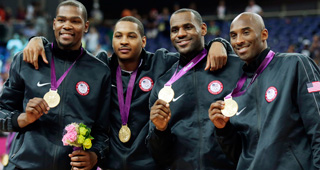
Since the United States began to allow professional players on their Olympic roster for the 1992 Games, there have been 63 NBA players to win Gold Medals. The United States has won the Gold Medal in five of the six Olympics, accounting for 60 of the players, while there were three NBA players on Argentina when they won in 2004.

The following team-by-team list tallies the Gold Medal winners at the time of their respective games.

The Utah Jazz have won the most Gold Medals with six, followed by the Thunder/Sonics with five, Bulls, Lakers, Heat and Knicks with four.

The Bobcats, Grizzlies, 76ers and Wizards have yet to have a player win a Gold Medal.

Atlanta Hawks (0)

Boston Celtics (1): Larry Bird (92)

Brooklyn Nets (1): Deron Williams (12)

Charlotte Bobcats (0)

Chicago Bulls (4): Michael Jordan (92), Scottie Pippen (92), Scottie Pippen (96), Andres Nocioni (04)

Cleveland Cavaliers (1): LeBron James (08)

Dallas Mavericks (1): Jason Kidd (08)

Denver Nuggets (3): Antonio McDyess (00), Carmelo Anthony (08), Andre Iguodala (12)

Detroit Pistons (3): Grant Hill (96), Carlos Delfino (04), Tayshaun Prince (08)

Golden State Warriors (1): Chris Mullin (92)

Houston Rockets (1): Hakeem Olajuwon (96)

Indiana Pacers (1): Reggie Miller (96)

Los Angeles Clippers (1): Chris Paul (12)

Los Angeles Lakers (4): Magic Johnson (92), Shaquille O’Neal (96), Kobe Bryant (08), Kobe Bryant (12)

Memphis Grizzlies (1): Shareef Abdur-Rahim (00)

Miami Heat (4): Tim Hardaway (00), Alonzo Mourning (00), Dwyane Wade (08), LeBron James (12)

Milwaukee Bucks (2): Ray Allen (00), Michael Redd (08)

Minnesota Timberwolves (3): Christian Laettner (92), Kevin Garnett (00), Kevin Love (12)

New Orleans Hornets (2): Chris Paul (08), Anthony Davis (12)

New York Knicks (4): Patrick Ewing (92), Allan Houston (00), Carmelo Anthony (12), Tyson Chandler (12)

Oklahoma City Thunder/Seattle Super Sonics (6): Gary Payton (96), Vin Baker (00), Gary Payton (00), Kevin Durant (12), James Harden (12), Russell Westbrook (12)

Orlando Magic: Dwight Howard (08)

Philadelphia 76ers (0): (Iguodala was member of 76ers until semifinals of 12 Olympics)

Phoenix Suns (3): Charles Barkley (92), Charles Barkley (96), Jason Kidd (00)

Portland Trail Blazers (2): Clyde Drexler (92), Steve Smith (00)

Sacramento Kings (1): Mitch Richmond (96)

San Antonio Spurs (3): David Robinson (92), David Robinson (96), Manu Ginobili (04)

Toronto Raptors (2): Vince Carter (00), Chris Bosh (08)

Utah Jazz (6): Karl Malone (92), John Stockton (92), Karl Malone (96), John Stockton (96), Carlos Boozer (08), Deron Williams (08)

Washington Wizards (0) 

Colleges

The below list accounts only for Olympic Gold Medals since 1992.

Duke and UCLA have had three separate Gold Medalists, while Cal has had three by counting Jason Kidd’s two wins.

Alabama: Antonio McDyess (00)

Arizona: Andre Iguodala (12)

Arizona State: James Harden (12)

Auburn: Charles Barkley (92), Charles Barkley (96)

California: Shareef Abdur-Rahim (00), Jason Kidd (00), Jason Kidd (08)

Central Arkansas: Scottie Pippen (92), Scottie Pippen (96)

Connecticut: Ray Allen (00)

Duke: Christian Laettner (92), Grant Hill (96), Carlos Boozer (08)

Indiana State: Larry Bird (92)

Georgetown: Patrick Ewing (92), Alonzo Mourning (00)

Gonzaga: John Stockton (92), John Stockton (96)

Hartford: Vin Baker (00)

Houston: Clyde Drexler (92), Hakeem Olajuwon (96)

Kansas State: Mitch Richmond (96)

Kentucky: Tayshaun Prince (08), Anthony Davis (12)

Illinois: Deron Williams (08), Deron Williams (12)

LSU: Shaquille O’Neal (96)

Louisiana Tech: Karl Malone (92), Karl Malone (96)

Marquette: Dwyane Wade (08)

Memphis: Penny Hardaway (96)

Michigan State: Magic Johnson (92), Steve Smith (00)

Navy: David Robinson (92), David Robinson (96)

North Carolina: Michael Jordan (92), Vince Carter (00)

No College: Kevin Garnett (00), Kobe Bryant (08), Dwight Howard (08), LeBron James (08), Kobe Bryant (12), Tyson Chandler (12), LeBron James (12)

Ohio State: Michael Redd (08)

Oregon State: Gary Payton (96), Gary Payton (00)

St. John’s: Chris Mullin (92)

Syracuse: Carmelo Anthony (08), Carmelo Anthony (12)

Temple: Pepe Sanchez (04)

Tennessee: Allan Houston (00)

Texas: Kevin Durant (12)

UCLA: Reggie Miller (96), Kevin Love (12), Russell Westbrook (12)

UTEP: Tim Hardaway (00)

Wake Forest: Chris Paul (08), Chris Paul (12)

2012 West Coast Conference Power Rankings

In their first season in the conference, BYU competed very well with Saint Mary’s and Gonzaga at the top of the standings and the statistical rankings.

The Gaels won the regular season crown with a 14-2 record. 

In order to determine our team rankings, we calculate the difference between a team's own FIC per game and their opponents' FIC for the entire conference season.

The FIC is a single statistical measurement that encompasses things such as scoring efficiency, rebounding, blocked shots, etc. Its purpose is to combine the box score into one statistic, both on a team level and for players. 

1. Saint Mary's: 21.06  
2. Gonzaga: 19.70  
3. Brigham Young: 19.07  
4. Loyola Marymount: 2.57  
5. San Francisco: -0.31  
6. San Diego: -6.57  
7. Pepperdine: -15.11  
8. Portland: -19.37  
9. Santa Clara: -21.04

Top NCAA Coaches Of Past Five Years

There are a lot of complicated ways to evaluate coaches. (If you want a more complicated measure, here is something I wrote about this back in the Fall.) But sometimes the simplest measure is the best measure. Who has the most NCAA titles? Who has the most wins? And using the Pomeroy Rankings we can break it down to an even simpler level. Who wins the most possessions? If you outscore your opponent on more trips down the floor, eventually good things will happen. 

Today, I look at the coaches with the best per possession numbers over the last five years. If you’ve followed my writing for the last few years, you’ve seen this table frequently. But I thought it was time to update the table with the data from the 2011-12 season. I’ve also decided to focus on the last five years to allow some of the recent success stories to climb the list. (I include the 10-year table at the end for the curious.)

The following table shows the

AAO = Average Adjusted Offense

AAD = Average Adjusted Defense

AEM = Average Efficiency Margin (Offense – Defense)

Here are the coaches with the top efficiency margins over the last five years:

AEM

Rank

Coach

AAO

Rank

AAD

Rank

Teams

33.0

1

Bill Self

119.2

2

86.1

1

Kansas

31.2

2

John Calipari

117.3

3

86.1

2

Kentucky, Memphis

30.4

3

Mike Krzyzewski

120.1

1

89.7

9

Duke

28.6

4

Thad Matta

116.7

5

88.1

5

Ohio St.

27.3

5

Bo Ryan

115.8

9

88.5

6

Wisconsin

27.0

6

Roy Williams

116.5

6

89.5

8

North Carolina

25.8

7

Jim Boeheim

116.5

7

90.6

15

Syracuse

24.7

8

Rick Barnes

115.4

11

90.6

14

Texas

24.4

9

Tom Izzo

114.3

15

89.9

11

Michigan St.

24.4

10

Bob Huggins

115.1

13

90.7

16

West Virginia

23.4

11

Rick Pitino

111.2

31

87.8

4

Louisville

23.1

12

Jim Calhoun

113.9

16

90.9

19

Connecticut

23.0

13

John Thompson III

113.8

17

90.8

17

Georgetown

22.6

14

Jamie Dixon

116.5

8

93.9

41

Pittsburgh

22.5

15

Matt Painter

111.4

30

88.9

7

Purdue

22.1

16

Frank Martin

112.9

19

90.8

18

Kansas St.

21.6

17

Dave Rose

113.0

18

91.4

20

BYU

21.2

18

Billy Donovan

116.9

4

95.6

56

Florida

20.6

19

Mark Few

112.9

20

92.3

23

Gonzaga

20.5

20

Scott Drew

115.3

12

94.7

49

Baylor

19.8

21

Frank Haith

114.7

14

94.9

52

Missouri, Miami (FL)

19.4

22

Mike Brey

115.7

10

96.2

58

Notre Dame

19.4

23

Mike Anderson

111.9

27

92.6

26

Arkansas, Missouri

19.3

24

Ben Howland

112.7

22

93.4

35

UCLA

19.2

25

Jay Wright

112.8

21

93.6

36

Villanova

18.8

26

Lorenzo Romar

112.0

25

93.1

28

Washington

18.4

27

Sean Miller

111.7

29

93.2

30

Arizona, Xavier

18.3

28

Bruce Weber

108.4

47

90.0

12

Illinois

18.1

29

Steve Alford

111.9

26

93.9

40

New Mexico

18.0

30

Leonard Hamilton

105.6

75

87.6

3

Florida St.

17.2

31

Randy Bennett

112.7

23

95.5

54

St. Mary's

17.0

32

Kevin Stallings

112.2

24

95.2

53

Vanderbilt

17.0

33

Tony Bennett

106.8

65

89.8

10

Virginia, Washington St.

16.9

34

Seth Greenberg

108.5

44

91.6

21

Virginia Tech

16.7

35

Steve Fisher

108.4

45

91.7

22

San Diego St.

16.6

36

Fran Dunphy

109.9

35

93.3

31

Temple

16.5

37

Brad Stevens

109.0

40

92.5

25

Butler

16.3

38

Mark Turgeon

110.4

34

94.2

45

Maryland, Texas A&M

16.3

39

Tubby Smith

109.4

38

93.1

29

Minnesota

15.6

40

Anthony Grant

106.0

72

90.4

13

Alabama, VCU 

For the first time since I’ve been tracking these stats, Bill Self has taken over the top spot in the coach rankings. And this season might be Self’s finest performance. Thomas Robinson has always been an explosive player. But Self has groomed him from an inconsistent freshman into the national player-of-the-year favorite. Tyshawn Taylor’s emergence as a polished player is equally remarkable. But it is Self’s consistent commitment to defense that has allowed his team to win conference titles year after year.

Bo Ryan remains a bit of an enigma on this list due to a lack of postseason success, but other coaches have posted great regular season numbers without post-season success too. Rick Barnes teams are frequently viewed as NCAA tournament disappointments. And John Thompson III is an even more extreme example. This table includes data from 2007-08 to 2011-12, and JT3 is the 13th best coach in that span. But John Thompson III has one NCAA tournament win in that span.

Because the college basketball postseason is single-elimination, the best teams frequently do not advance. But you have to believe the coaches at the top of this list, by winning the possession battle consistently, won’t be disappointed in the postseason forever.

I decided to cut the list off at 40 coaches because the list was starting to look a lot less elite. Tubby Smith has been more of a compiler at Minnesota than a winner. His teams have been ranked in the 40s, 50s and 60s nationally in his five-year tenure with the Gophers. Because they’ve never been terrible (even beating North Carolina and Purdue before things went south last year), his average places him at 39th nationally over the five-year span. But he has yet to have a single dominant season. Coaches with single great years (think Tom Crean) have too many losing years dragging down their numbers. But the coaches listed above have been remarkably consistent over the last 5 years.

Who to Hire?

You might think this type of list would be a good roadmap to hiring a new coach. But the problem is that many of these coaches are not in a hurry to leave. Mark Few is quite happy at Gonzaga thank you very much. And Brad Stevens has almost certainly turned down some attractive opportunities to stay at Butler. 

Still, I think if I had a BCS opening, I would be running to offer BYU’s Dave Rose a huge contract. Not only has Rose posted great efficiency stats, his teams almost always play at a fun fast-pace. BYU’s trip across the country to beat Virginia Tech on Wednesday night might not mean a lot if Virginia Tech continues to struggle in the ACC, but it impressed me immensely.  How many coaches could take their team from coast-to-coast and win a game where they shot 33%?

Steve Alford might also deserve another shot at a BCS gig. It isn’t that he can’t win at New Mexico or that the Lobos don’t pay well enough, but given the unstable membership in the MWC, he might welcome another opportunity to show his stuff in a top league once again.

Offense or Defense

As I have noted in previous years, there are a number of one-dimensional coaches on the list. Leonard Hamilton, Tony Bennett and Bruce Weber have all succeeded almost entirely by teaching defense. Meanwhile Mike Brey and Scott Drew depend on their offenses to carry their teams. Jamie Dixon is also a bit of a one-dimensional offensive coach. But it is still surprising how bad Dixon’s defense has been this season. 

Here are the coaches with the top efficiency margins over the last 10 years:

AEM

Rank

Coach

AAO

Rank

AAD

Rank

Teams

31.2

1

Bill Self

117.4

4

86.3

1

Kansas, Illinois

30.5

2

Mike Krzyzewski

118.9

1

88.4

3

Duke

30.2

3

Roy Williams

118.6

2

88.5

5

North Carolina, Kansas

26.9

4

John Calipari

115.0

12

88.1

2

Kentucky, Memphis

26.7

5

Thad Matta

115.8

7

89.1

7

Ohio St., Xavier

26.5

6

Bo Ryan

115.2

8

88.7

6

Wisconsin

25.5

7

Billy Donovan

118.2

3

92.7

19

Florida

25.5

8

Rick Barnes

116.7

5

91.2

14

Texas

24.6

9

Jim Calhoun

114.0

13

89.4

8

Connecticut

24.1

10

Rick Pitino

112.6

18

88.4

4

Louisville

24.1

11

Tom Izzo

115.0

10

91.0

11

Michigan St.

24.0

12

Jim Boeheim

115.1

9

91.1

13

Syracuse

The Census: RealGM's NCAA Rankings For Dec. 5

Aaron Craft, Jared Sullinger and Ohio State were ready to trounce on the No. 1 slot in RealGM's rankings if not for an Anthony Davis block.

The Census: RealGM's NCAA Rankings For Nov. 28th

Kentucky at No. 1, North Carolina drops to No. 4, while Saint Louis, Harvard, San Diego State and Creighton enter RealGM's rankings.

Reviewing Nike Hoop Summit 2011

Unlike the McDonald's All-American Game which includes some good but not great high school players, the Nike Hoops summit showcases only the absolute top recruits.

Best Individual Games Of 10-11 NCAA Season

Jared Sullinger, Kemba Walker and Jimmer Fredette have each had some of the best single games in the country this seaosn.

Conference Rankings (End Of Jan. Edition)

As we have commonly seen in recent seasons, the Big East has been the deepest conference in the country.


Basketball Wiretap Headlines

    NBA Wiretap Headlines

      NCAA Wiretap Headlines

        MLB Wiretap Headlines

          NFL Wiretap Headlines

            NHL Wiretap Headlines