May 12, 2013 10:35 PM EDT 
Andrew Wiggins is expected to make his college decision on Tuesday afternoon. Assuming the announcement is not leaked on Monday, I plan to post an updated Top 25 around 7pm ET on Tuesday evening. Even if Wiggins commits to Kentucky, the numbers below will not change substantially. The Wildcats are already projected as the No. 1 team in the nation and Kentucky is deep enough that another elite recruit won’t dramatically change the team’s outlook.
But this week I wanted to focus on the SEC because two other key decisions have already happened. First, Florida added Rutgers transfer Eli Carter. Second, it was announced that Tennessee guard Trae Golden will not return next year. With that news, here is how my lineup-based model projects the SEC standings to shake out next year:
|
Team
|
Proj CW
|
Proj CL
|
Proj Off
|
Proj Def
|
Last Off
|
Last Def
|
T100
|
Ret Min
|
Ret Poss
|
|
Kentucky
|
15
|
3
|
123.6
|
92.5
|
110.3
|
95.4
|
9
|
44%
|
42%
|
|
Florida
|
15
|
3
|
115.7
|
87.2
|
117.2
|
83.5
|
7
|
54%
|
51%
|
|
Alabama
|
11
|
7
|
106.0
|
89.2
|
102.5
|
89.7
|
6
|
70%
|
72%
|
|
Tennessee
|
11
|
7
|
109.2
|
93.5
|
108.3
|
97.7
|
4
|
60%
|
64%
|
|
LSU
|
10
|
8
|
110.9
|
96.4
|
104.7
|
97.9
|
4
|
75%
|
76%
|
|
Vanderbilt
|
10
|
8
|
105.5
|
92.2
|
101.8
|
93.8
|
4
|
100%
|
100%
|
|
Arkansas
|
10
|
8
|
110.3
|
96.6
|
105.4
|
95.1
|
3
|
65%
|
55%
|
|
Mississippi
|
8
|
10
|
106.6
|
96.8
|
111.6
|
93.3
|
1
|
58%
|
60%
|
|
Missouri
|
8
|
10
|
106.8
|
97.0
|
114.5
|
93.9
|
3
|
39%
|
37%
|
|
Auburn
|
7
|
11
|
104.5
|
98.7
|
96.8
|
100.2
|
2
|
50%
|
47%
|
|
Texas A&M
|
6
|
12
|
101.2
|
96.2
|
103.1
|
96.8
|
3
|
63%
|
60%
|
|
S. Carolina
|
6
|
12
|
104.8
|
100.2
|
98.8
|
104.4
|
3
|
45%
|
50%
|
|
Georgia
|
5
|
13
|
99.4
|
96.5
|
101.2
|
94.9
|
0
|
57%
|
58%
|
|
Mississippi St.
|
4
|
14
|
94.3
|
95.3
|
89.9
|
99.5
|
0
|
96%
|
97%
|
For a list of column definitions, click here.
Kentucky: Even if Kentucky is young, I completely agree with the model’s conclusion that this is the No. 1 team in the nation. The roster is full of instant impact Top 20 recruits, and even if a few don’t pan out, there is so much depth that it won’t matter. Probably the only place where Kentucky doesn’t have great depth is the back-court, so only an injury or poor play by Andrew or Aaron Harrison could derail the team’s season.
But let’s not get carried away with the undefeated talk either. Even if SEC basketball is in a down period, there are enough quality teams and differences in styles of play that the odds still favor the Wildcats tripping up a few times in conference play.
Florida: There seems to be a clear consensus that Kentucky, Louisville, and Michigan St. are the top three teams in the nation. But this week Florida added Rutger’s transfer Eli Carter. And while there is no guarantee that Carter should be eligible immediately, if the Arsalan Kazemi situation is any indication, I think there is a good chance Carter will be eligible to play next season. After the mistreatment of players at Rutgers, I think the NCAA will be hesitant to turn down a waiver request. And since Eli Carter gives the Gators another perimeter scorer (one of the team’s only question-markets), the model now likes them to jump ahead of Louisville for third nationally.
And looking at the roster, I cannot help but agree. Florida goes two deep at basically every position. There is basically no downside risk for this roster. Is Scottie Wilbekin or Top 10 recruit Kasey Hill the better PG. It doesn’t matter, they can play together. Should they be joined by hot-shooting Michael Frazier or Eli Carter? And what about the front-court? Will Top 20 recruit Chris Walker and South Carolina transfer Damontre Harris be able to earn playing time with Patrick Young and Will Yeguete coming back? And Casey Prather and Virginia Tech transfer Dorian Finney-Smith are plenty good too. Honestly, who is the weakest player in that 10-man rotation? All 10 of those guys are SEC-caliber starters. Is it any wonder why DeVon Walker and Cody Larson transferred out? They weren’t even going to have a chance to play this year.
Alabama: Alabama point-guard Trevor Releford remains a true star and Levi Randolph is still becoming one. But the biggest improvement should be in the front-court. With former #22 recruit Devonta Pollard becoming a sophomore, I expect a big jump in his efficiency. It will help that Pollard will be joined in the front-court by Top 100 recruits Jimmy Taylor and Shannon Hale. The team also adds a JUCO transfer Algie Key. Combine that talent with Anthony Grant’s ability to teach defense and you have a solid NCAA tournament team. Before Trevor Lacey transferred, I had Alabama in the preseason Top 25.
Tennessee: This week Tennessee lost PG Trae Golden. While the university cannot issue a formal statement, it is likely he is leaving because of academic issues. Cuonzo Martin went on the offensive with reporters and tried to claim that his team’s expectations shouldn’t slip without Golden. But that is ludicrous. Golden had an ORtg of 110 and 107 the last two seasons and that kind of veteran offensive efficiency at the PG spot is very hard to replace. The team is now projected to start unranked freshman point-guard Darius Thompson and I project Thompson to have an ORtg of 97. No matter what Cuonzo Martin says, freshmen simply make more turnovers and mistakes. Overall, Tennessee’s offensive projection drops from 115 to 109 thanks to Golden’s departure. Like Alabama, Tennessee fell out of my preseason Top 25.
LSU: Second year head coach Johnny Jones has upgraded the quality of recruiting with Top 100 players Jarrell Martin, Jordan Mickey, and Tim Quarterman joining the fold. He has also added JUCO transfer John Odo to provide size in the paint, just in case Mickey and Martin aren’t ready to lead from day one. And that added talent should help high volume shooter and high potential forward Johnny O’Bryant improve his efficiency. With Anthony Hickey returning to man the PG slot and Andre Stringer knocking down threes, LSU has a solid rotation on paper. But LSU is still a bubble team. And with all those new players playing major minutes, expect some puzzling losses at times this season.
Vanderbilt: A year after losing everyone to graduation, Vanderbilt returns their entire rotation. The team also adds Top 100 recruit Damian Jones and Tulsa transfer Eric McCllelan. With some normal player development, Vanderbilt will be better. But Kedren Johnson is the only player who looks like he might be a star.
Arkansas: With Hunter Mickelson transferring and Marshawn Powell and BJ Young declaring for the draft, it sure feels like Arkansas is headed in the wrong direction. And with Young departing, the team has a glaring need at PG. Arkansas made a play for Rutgers transfer Jerome Seagers but Seagers chose Auburn. Probably the only thing that could make Razorbacks fans feel worse than losing three key players unexpectedly was losing out on a player to Auburn. Still, if you are expecting Arkansas to fall off the map, the recruiting class will probably stop that from happening. Bobby Portis is an instant impact recruit in the post, and Moses Kingsley will provide some key minutes as well. Houston transfer Alandise Harris will also chip in this season. And Mike Anderson is a solid coach. But the recent string of departures is disheartening.
Ole Miss: The back-court of Marshall Henderson and Jarvis Summers is back but the other three starters are gone. And without a slew of elite recruits (either new or incumbent on the roster), replacing those missing players will be difficult. In the front court, the return of DeMarco Cox may help, but he is the kind of player that never shoots the basketball unless wide-open, and coming off an injury he certainly does not project as a big-time scorer. The same can be said for Aaron Jones who was also rather passive last season. And that means unranked freshmen recruits like Dwight Coleby and Sebastian Saiz will play more than Andy Kennedy would probably like.
Last season was head coach Andy Kennedy’s best defensive season of his career. But Murphy Holloway, the team’s best ball thief, and Reginald Buckner, the team’s best shot-blocker, are gone. And unless they can duplicate that kind of defensive performance, they probably won’t have enough offense to make the NCAA tournament. Aaron Jones was a solid shot-blocker in limited minutes last season, so another strong defensive season is possible, but certainly not probable.
Missouri: While Missouri can put together a pretty solid rotation of 7 players, the team will struggle to replace so many star players. PG Wes Clark is a Top 100 recruit and he will start from Day 1, but he is no Phil Pressey. Johnathan Williams is another Top 100 recruit and JUCO transfer Keanau Post was a Top 10 JUCO player. But neither projects at Laurence Bowers or Alex Oriakhi’s level. Perhaps the only player who can match last year’s quality is Tulsa transfer Jordan Clarkson who can probably match what Keion Bell brought to the team last year. But if Missouri is going to have any chance of matching last year, they are going to need one of the three returning players to step up their game. And while Earnest Ross and Tony Criswell will be nice pieces, the player most likely to break out is Jabari Brown. Brown was a Top 20 recruit out of high school, and joined the team mid-season last year. With a full fall of games under his belt, perhaps Brown can reach that next level. But his development won’t make up for what the team loses. And given Frank Haith’s struggles at teaching defense, the tournament seems unlikely.
Auburn: I’m assuming Rutgers transfer Jerome Seagers will get a waiver to play right away. Seagers and Virginia transfer KT Harrell will join Chris Denson and Jordan Price to form a passable SEC back-court. But the lack of talent in the front-court will keep this team near the bottom of the SEC.
Texas A&M: PG Fabyon Harris and forward Kourtney Roberson are fantastic players. But the rest of the roster is hideously inefficient. Normally I’d talk about how former Top 100 recruits Alex Caruso and J-Mychal Reese are poised for a breakout sophomore season. But after they posted ORtgs of 88 and 83 last year, it would take a minor miracle for them to become dependable players next season. And Florida St. transfer Antwan Space looked ill-equipped to play major college ball in his short time at that school too.
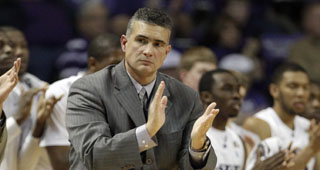
South Carolina: My model still loves what Frank Martin did at Kansas St. He was a consistent winner, and other than his first season, he did it without a roster full of elite talent. This Post & Courier story about the night SC’s Brenton Williams scored 38 points summed up Martin’s views perfectly. “My whole thing is, I don’t care what your talent level is. That’s irrelevant to me. I don’t care if you have 96 stars. I don’t care if somebody rated you a 99… I watch guys play 50 times over a course of a year, including summer basketball, and I still don’t know if they’re good enough. How people can watch somebody play three times and determine whether they’re a three-star, four-star, I don’t get that. I don’t care how many stars you’ve got. I don’t care who you are. I don’t care what your talent level is. Bring some positive energy every day.” Martin inherited a rag-tag bunch of players that went 2-14 the previous year and believed he could win with that group because he had done it before. But last year a coach who had never had a defensive performance outside the top 50, suddenly coached a team to the 228th best defense in the nation. His team was hard-nosed and physical as always, committing fouls at a record pace. But unlike most seasons, that didn’t translate to a hard-nosed two-point defense. Instead of fouling to stop lay-ups, South Carolina fouled and allowed lay-ups.
The real problem was the lack of size and depth in the front-court. Michael Carrera was an under-sized rebounding machine (much like Colorado St.’s Pierce Hornung), but he wasn’t the type of guy who could anchor the defense. It hurt the team that Carlton Geathers was injured. It also hurt that RJ Slawson could never live up to Frank Martin’s high expectations. (I wasn’t even remotely shocked to see that Slawson transferred this off-season) But that meant the focus had to be on freshmen front-court players, and they weren’t ready.
Bruce Ellington (when he returns from football), Sindarius Thornwell (the top 100 recruit), Ty Johnson (the mid-season Villanova transfer who struggled mightily for Jay Wright), and Brenton Williams (efficient but as Martin put it “he might be slower than me”) all provide something. And ideally Carrera could play more minutes at small-forward (at least defensively). But the 5 other players competing for time in the front-court have nearly equivalently low expectations. And that means no matter what Frank Martin has accomplished in the past, the turnaround will take time.
Georgia: When Georgia hired Mark Fox, I thought he was a great hire. But with Gerald Robinson graduating and Ketavious Caldwell-Pope leaving in the draft, there is literally nothing left. There are no Top 100 recruits left on the roster. There are no obvious stars.
Mississippi St.: Everyone is back. But last year’s team was so horrible that even with substantial improvement on offense and defense, this is still by far the worst team in the SEC.
Eli Carter, Trae Golden, Kentucky Wildcats, Florida Gators, Alabama Crimson Tide, Tennessee Volunteers, LSU Tigers, Vanderbilt Commodores, Arkansas Razorbacks, Mississippi State Bulldogs, Ole Miss Rebels, Missouri Tigers, Auburn Tigers, Texas A&M Aggies, South Carolina Gamecocks, Georgia Bulldogs, Southeastern Conference, NCAA Nov 07, 2012 2:18 PM EST The tempo free rankings I released last week include a coaching component. It tends to bring down teams like Michigan (based on John Beilein’s historical struggles on defense), lowers Baylor slightly, and causes a few other peculiar rankings. One question we might ask is, "How would the rankings look if we dropped the coaching effect?" If we assumed every team had an average D1 coach, what would my Top 345 look like?
Note that this column isn't about ranking coaches. For example, today's column isn't going to talk about recruiting. This column takes all the players on the team as given, and doesn't give the coach any credit for bringing elite talent to campus.
And this isn't about in-season coaching either. In the case of Indiana, if everyone had an average coach, the Hoosiers would still be #1. That's because the Hoosiers bring back a slew of talented players including national player of the year candidate Tyler Zeller. If everyone in the nation had an average D1 coach, the Hoosiers would still look like the best team on paper.
In fact, because of the large correlation between talent-on-hand and coaching, discrepancies usually only exist when a coaches ability doesn’t match up with who he has in the lineup. With that in mind, here are some teams whose rankings would change meaningfully if I ignored coaching effects in my model.
#2 Kentucky would be #5 if my model ignored coaching.
Kentucky has Top 10 talent no matter how you slice it. But only John Calipari has proven he can win big instantly with such a large group of freshmen.
#6 Florida would be #14 if my model ignored coaching.
I don't think we give Billy Donovan enough credit for developing dominant offensive teams. The Gators have plenty of strong pieces and Donovan will fit them together.
#7 Duke would be #22 if my model ignored coaching.
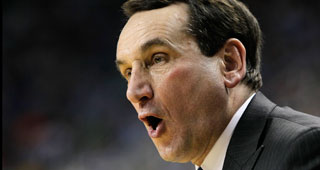
Offense or defense, any model you estimate says Mike Krzyzewski gets the most out of his players. If not for him, we'd be spending a lot more time scrutinizing whether point guard Quinn Cook could lead a team to an ACC championship. And we’d spend hours documenting how terrible Duke’s defense was last year and wondering whether Ryan Kelly will ever be an effective defender after returning from injury. But in 10 years, Mike Krzyzewski has only had an adjusted defense worse than 90.8 once. Faith in his ability to improve Duke’s defense is more than warranted.
#14 UNLV would be #7 if my model ignored coaching.
Dave Rice has put together a scary collection of talent this season. Once we reach the mid-semester break, UNLV will have eight players who were consensus Top 100 recruits out of high school, including Top 10 freshman Anthony Bennett. And that list doesn’t even count returning players Justin Hawkins and Carlos Lopez who were not elite recruits out of high school, but who were incredibly efficient last season. The reason the Running Rebels aren’t higher in my model is because Dave Rice doesn’t yet have a track record as an elite defensive coach. Coaching dominant defense at a fast pace is a special skill. While Roy Williams has proven his teams can run and dominate at preventing points, Dave Rice’s teams have only shown flashes of defensive strength.
#113 SC Upstate would be #61 if my model ignored coaching.
Since SC Upstate may not be a familiar name, I think it is worth emphasizing that SC Upstate’s head coach is Eddie Payne. Payne coached Oregon St. in the late 1990’s and failed to achieve a winning record with the Beavers.
In my last column, I talked a lot about how you should not expect the loss of key players to impact all teams equally. Instead you need to look at who is inserted into the lineup. Similarly, you should not expect player development to be equivalent for all types of players. BCS caliber players can have different trajectories than players in smaller conferences. The coaching effect helps proxy for this.
As an example, South Carolina Upstate returns a remarkable 93% of its possessions from last season. And my model picks the Spartans to improve from 132nd in the nation to 113th, narrowly edging Mercer for the A-Sun title. But if I assumed Clemson and SC Upstate players developed at the same rate, my model would project something breathtakingly high for the Spartans.
Instead, my model notes how head coach Eddie Payne’s teams have had a remarkably flat path in their first four years in D1. Payne was not typically able to get his players to make significant jumps in offensive efficiency, or improve substantially on defense from year to year. Last year, behind a class of extremely impressive sophomores, Upstate did improve substantially, but the model is cautious to expect that every season.
The differences listed above were some of the larger differences I found when I removed the coaching effect, and they hardly seem controversial. But other coaching adjustments have made me scratch my head a little. For example:
#85 South Carolina would be #178 if my model ignored coaching.
This offseason, the Gamecocks hired Frank Martin as their new head coach. As I emphasized in the introduction, when returning talent and coaching talent do not match, the coaching effects tend to have the biggest kick. The way South Carolina’s players performed last season would lead you to believe the team has almost no SEC-caliber talent. And that is far below what we would expect from a Frank Martin coached team. Thus, we get a big contrast in expectations with and without Martin.
My model expects Frank Martin to emphasize defensive rebounding and physical play and improve South Carolina’s adjusted defense from 101.0 last season to 96.8 this season. I think most people can sort of visualize that happening. The change may seem a little extreme, but it isn’t that implausible. What may be a little harder to imagine is Frank Martin developing South Carolina’s offense from 101.6 to 105.8. But keep in mind that since Michael Beasley left, Martin has had limited talent at Kansas St. He has developed strong offenses without rosters filled with Top 100 players. The key is that Martin teaches players to crash the offensive boards and get to the free throw line at an incredible rate. Those are very real skills, and skills that can be taught.
This expected improvement from Martin may be overly optimistic, especially until Bruce Ellington becomes available after the football season. But I was at least somewhat reassured by Frank Martin’s comments to Jeff Goodman last week. Martin went so far as to say he doesn’t understand why his team cannot compete in the SEC in year one.
#74 UMass would be #52 if my model ignored coaching.
My model is currently skeptical of Derek Kellogg. Derek Kellogg took over at UMass for the 2008-09 season:
|
Year
|
UMass Offense
|
|
2011-12
|
105.4
|
|
2010-11
|
95.4
|
|
2009-10
|
101.6
|
|
2008-09
|
104.2
|
|
2007-08
|
110.1
|
In his first three seasons, Kellogg’s team got worse offensively. I’m skipping over some key details about returning players and minutes here, but UMass was not hit unusually hard by player defections over this time period. You could also probably make an argument that all that happened in 2012 is that Kellogg got lucky and found Chaz Williams as a transfer. Chaz Williams’ incredible ability to distribute the ball suddenly transformed UMass into an elite team, not Kellogg’s ability to develop players. (That isn’t actually what the model thinks. Williams was a good, but not dominant player at Hofstra, and Kellogg does get meaningful credit for improving Williams’ game.) But the basic point is there. The model is very concerned about whether players consistently get better under Kellogg. 2011-12 was also Kellogg’s best defensive season by far, and the model is nervous about whether Sampson Carter can return from injury and maintain that level of play.
I go back and forth about whether these coaching adjustments are appropriate. The reality is that you cannot rank teams without including some consideration for the head coach. Nobody takes a vote in the AP Poll without thinking about who is on the sideline for each team. But determining where and how to include these coaching effects can make a major difference in the rankings.
(For the record, Ken Pomeroy’s model doesn’t explicitly use 10 years of coaching data, but his model isn’t blind to coaching either. By using multiple years of historic offense to predict this year’s offense, and multiple years of historic defense to predict this year’s defense, Pomeroy is essentially including a coaching effect too.)
Season Kick-Off
The season kicks off on Friday with a full slate of Aircraft Carrier games. Ohio St. takes on Marquette aboard the USS Yorktown, Georgetown takes on Florida aboard the USS Bataan, and Syracuse takes on San Diego St. aboard the USS Midway on Sunday. (And don’t forget Michigan St.’s game against Connecticut from Ramstein Air Force base in Germany.) The multi-game military salute makes this one of the better season tip-offs in recent years.
But despite the backdrop of the games listed above, the most highly anticipated matchup might be Kentucky vs Maryland from the Barclays Center in Brooklyn. Many people want to tune in to see Kentucky’s exciting new freshmen in action. Others want to tune in to see if the defending national champions get knocked off early in the season. But this game became much more interesting on Wednesday morning when we learned that Xavier transfer Dezmine Wells was declared immediately eligible at Maryland.
With the addition of Wells, Maryland improves from the 111th rated team in the nation in my rankings to the 96th ranked team. I think a lot of experts are going to think that is low. My model is projecting Maryland’s defense to improve by nearly 4 points, but the offense continues to have some questions which holds my model back from endorsing Maryland as an NCAA tournament team.
My model’s expectations for Maryland’s lineup are listed below. First, Dez Wells was expected to be Xavier’s best player this season, and he projects to be the best player on an improving Maryland squad. I think my model is also relatively optimistic about Nick Faust. Faust was horrible last year. With a 86.8 ORtg, Faust’s shooting percentage was terrible and his turnover rate was equally bad. Still, Mark Turgeon gave him a lot of minutes and that helps confirm what the high school scouts saw when they rated him 43rd in the nation. If Turgeon trusted him that much with such bad numbers, Faust must have a lot of potential. That is why he is expected to mature into an effective team leader this season and improve his ORtg to a much more respectable 101.6.
James Padgett is obviously a solid rock in the lineup. But then we come to the models first difficult conclusion. Who plays in the post alongside Padgett? Alex Len is the natural choice, but my model sees his middling numbers last season, 98.9 ORtg, and likes freshmen Shaquille Cleare to challenge Len for that playing time. While I agree that Cleare’s upside is pretty high, I feel like that may be a little pessimistic about Len. Len didn’t become eligible until mid-season last year, and his middling offensive numbers last year may not be representative of what he can do when he has a full slate of fall games to integrate with his team. If you are looking for an argument for why Maryland’s offense will be better than what is listed here, the best explanation would be a breakout season from Len.
My model is also very concerned about Pe’Shon Howard’s two year stats. Howard posted a 99.6 ORtg two years ago and an 81.0 ORtg last year before going down with an ACL tear. Howard was never fully healthy last year after missing the beginning of the season with a foot injury. But the model is skeptical of an oft-injured inefficient player who was not an elite recruit out of high school. Howard’s ball-handling and point-guard skills may earn him a starting nod, but his production needs to be better than it was last season for Maryland to be an NCAA contender.
Looking at the bench, with Wells and Faust playing major minutes, Albany transfer Logan Aronhalt may have trouble earning major playing time, but his three point shooting will earn him a key role in the rotation. And Freshmen Jake Layman also gets a nod for major minutes as a more athletic and versatile wing.
What Maryland really needs to become an NCAA team is for someone to emerge as an efficient high volume scorer. There are some possibilities, but this is still a young team with a lot of new pieces.
|
Maryland Projected Lineup
|
Ht Ft
|
In
|
RSCI
|
Class
|
Pred Min
|
Pred Poss
|
Pred ORtg
|
|
Dezmine Wells
|
6
|
5
|
54
|
So
|
71%
|
20%
|
109.5
|
|
Nick Faust
|
6
|
6
|
43
|
So
|
70%
|
23%
|
102.1
|
|
James Padgett
|
6
|
8
|
|
Sr
|
60%
|
22%
|
108.5
|
|
Shaquille Cleare
|
6
|
9
|
34
|
Fr
|
51%
|
20%
|
104.0
|
|
Pe`Shon Howard
|
6
|
3
|
|
Jr
|
50%
|
18%
|
96.0
|
|
Logan Aronhalt
|
6
|
3
|
|
Sr
|
50%
|
23%
|
103.0
|
|
Jake Layman
|
6
|
8
|
67
|
Fr
|
43%
|
19%
|
101.7
|
|
Alex Len
|
7
|
0
|
|
So
|
42%
|
18%
|
103.4
|
|
Seth Allen
|
6
|
1
|
|
Fr
|
33%
|
18%
|
99.6
|
|
Charles Mitchell
|
6
|
8
|
|
Fr
|
29%
|
18%
|
99.5
|
| |
|
|
|
|
|
SOSmod
|
1.023
|
| |
|
|
|
|
|
Pred Off
|
105.8
|
Apr 23, 2012 1:15 PM EDT This spring South Carolina hired Frank Martin and Kansas St. hired Bruce Weber to replace him. I’ve written a lot of words about Martin and Weber in the past. Martin is one of the best coaches at teaching offensive rebounding in the nation. Weber’s teams are constantly competitive but struggle in close games due to an offense that fails to get free throw attempts. Weber’s teams win with some of the best man-to-man defense in the nation. But Frank Martin’s defense is almost equally good. In fact, their tempo free stats were nearly identical at their previous schools:
|
Coach
|
School
|
Years
|
Avg Adj O
|
Avg
Adj D
|
|
Bruce Weber
|
Illinois
|
9
|
111.6
|
89.8
|
|
Frank Martin
|
Kansas St.
|
5
|
112.6
|
91.2
|
Martin’s teams were more consistent. His worst team was 44th in the nation in the Pomeroy Rankings, while Weber’s worst team was last year’s Illinois squad which finished 73rd. But Weber’s team achieved a higher peak reaching the national championship in 2005.
Overall these are both incredibly “safe” moves for the two universities to make. Even in their worst seasons, Martin and Weber are going to be in the hunt for an NCAA tournament bid. But what will it take for these coaches to reach a new higher level with their new schools? To answer that question, let’s take a look back.
A Quick Trip Down Memory Lane
First let’s look at how freshmen have performed under each coach. The thing that stands out for Bruce Weber is how terribly inefficient his freshmen have been. This lack of efficiency is startling given the large number of Top 100 recruits Illinois has had on the roster the last few seasons. DJ Richardson had a fabulous freshmen campaign, but over the years, very few of Bruce Weber’s players have been efficient in their first year. (The exceptions tend to be solid three point shooters like Jamar Smith and Tyler Griffey.) Demetri McCamey’s freshmen year was widely praised because of a few huge games, but a 92.7 ORtg while using only 22% of the possessions when on the floor was far from spectacular.
Fr Year = Freshmen Year
PctMin = Percentage of Minutes Played
ORtg = Offensive Rating, Points Produce Per 100 Possessions
PctPoss = Percentage of Possession’s Used when on the Floor
|
Player
|
Fr Year
|
PctMin
|
ORtg
|
PctPoss
|
|
D.J. Richardson
|
2010
|
76%
|
105.3
|
18%
|
|
Demetri McCamey
|
2008
|
67%
|
92.7
|
22%
|
|
Tracy Abrams
|
2012
|
52%
|
89.4
|
16%
|
|
Jereme Richmond
|
2011
|
50%
|
102.3
|
22%
|
|
Brandon Paul
|
2010
|
47%
|
92.3
|
27%
|
|
Jamar Smith
|
2006
|
46%
|
123.6
|
18%
|
|
Rich McBride
|
2004
|
31%
|
104.5
|
14%
|
|
Chester Frazier
|
2006
|
28%
|
83.0
|
13%
|
|
Brian Randle
|
2004
|
27%
|
96.8
|
16%
|
|
Mike Tisdale
|
2008
|
25%
|
106.1
|
19%
|
|
Mike Davis
|
2008
|
25%
|
93.7
|
16%
|
|
Nnanna Egwu
|
2012
|
24%
|
83.0
|
15%
|
|
Meyers Leonard
|
2011
|
20%
|
79.7
|
18%
|
|
Tyler Griffey
|
2010
|
18%
|
116.6
|
19%
|
|
Mycheal Henry
|
2012
|
14%
|
99.4
|
22%
|
|
Brian Carlwell
|
2007
|
13%
|
94.2
|
17%
|
|
Calvin Brock
|
2006
|
11%
|
84.7
|
23%
|
|
Mike Shaw
|
2012
|
11%
|
63.6
|
16%
|
|
Jeff Jordan
|
2008
|
10%
|
73.2
|
18%
|
|
Crandall Head
|
2011
|
8%
|
77.6
|
20%
|
|
Richard Semrau
|
2007
|
7%
|
94.1
|
22%
|
|
Shaun Pruitt
|
2005
|
6%
|
77.7
|
24%
|
|
Bill Cole
|
2008
|
6%
|
95.8
|
21%
|
|
Warren Carter
|
2004
|
5%
|
*
|
*
|
|
Joseph Bertrand
|
2004
|
4%
|
*
|
*
|
|
Average
|
|
25%
|
92.6
|
19%
|
*Bertrand and Carter didn’t even use 25 possessions as freshmen (and Bertrand was a redshirt!)
The next table shows freshmen under Frank Martin. Once again there are a handful of efficient three point shooters (see McGruder and Spradling), but other than Michael Beasley, Frank Martin hasn’t exactly been producing dominant rookies. But the difference between Weber and Martin is that freshmen are rarely horrible under Martin. The lowest ratings under Martin are not nearly as low as the lowest ratings under Weber.
It isn’t about playing time. Martin has given his freshmen more minutes and seen steadier production. And it isn’t all about Michael Beasley. Even without the big man, Martin’s players would be substantially more efficient and earn more minutes on average.
I think the key is style of play. Bruce Weber’s runs a precision shooting-based offense, and few first-year players have the skill set to pull it off. Meanwhile Frank Martin often gets players to fight like crazy for offensive rebounds right off the bat. Frank Martin knows how to teach players a physical style of basketball in a relatively short period of time. And that is great news for South Carolina fans. With a few strong post players, South Carolina can be competitive again in year one.
|
Player
|
Fr Year
|
PctMin
|
ORtg
|
PctPoss
|
|
Michael Beasley
|
2008
|
78%
|
120.7
|
34%
|
|
Jacob Pullen
|
2008
|
58%
|
103.7
|
22%
|
|
Will Spradling
|
2011
|
55%
|
115.8
|
15%
|
|
Angel Rodriguez
|
2012
|
52%
|
93.3
|
26%
|
|
Jamar Samuels
|
2009
|
51%
|
110.4
|
21%
|
|
Thomas Gipson
|
2012
|
43%
|
99.8
|
24%
|
|
Wally Judge
|
2010
|
28%
|
93.8
|
18%
|
|
Shane Southwell
|
2011
|
28%
|
80.5
|
14%
|
|
Rodney McGruder
|
2010
|
27%
|
126.5
|
14%
|
|
Ron Anderson
|
2008
|
27%
|
114.6
|
15%
|
|
Martavious Irving
|
2010
|
23%
|
90.9
|
12%
|
|
Dominique Sutton
|
2008
|
19%
|
110.8
|
13%
|
|
Fred Brown
|
2008
|
19%
|
109.8
|
20%
|
|
Jordan Henriguez-Roberts
|
2010
|
18%
|
94.5
|
14%
|
|
Adrian Diaz
|
2012
|
17%
|
97.6
|
21%
|
|
Nick Russell
|
2010
|
10%
|
78.9
|
16%
|
|
Victor Ojeleye
|
2009
|
4%
|
*
|
*
|
|
Average
|
|
33%
|
102.6
|
19%
|
Though not listed, both coaches gave playing time to seven transfers at their previous school and again Martin’s transfers debuted as the more efficient players. Martin’s incoming transfers played similar minutes to Weber’s transfers, but since Martin has used seven transfers in only five years, Martin obviously recruits and uses transfers more frequently.
Player Development
In the next two tables I look at changes in playing time and efficiency for all returning players. The change in minutes is the difference between the most recent season and the debut season. For inherited players, the change in minutes is the difference between the most recent season and the last season under the previous coach.
I also compare the change in ORtg for the same time period. But since shot volumes can impact efficiency, I adjust this based on the rule that 1% more possession’s used is worth 1.25 points of efficiency. Thus a player that moves from shooting 20% of the time to 24% of the time and keeps the same efficiency tallies a 5 point increase in his ORtg.
|
Returning Players
|
ChPctMin
|
ChORtg
|
Yrs Ret
|
|
Meyers Leonard
|
59%
|
39.2
|
1
|
|
Shaun Pruitt
|
58%
|
30.0
|
3
|
|
Warren Carter
|
58%
|
17.1
|
2
|
|
Mike Davis
|
57%
|
22.3
|
3
|
|
Chester Frazier
|
48%
|
26.6
|
3
|
|
Bill Cole
|
46%
|
22.8
|
3
|
|
Luther Head
|
43%
|
14.7
|
2
|
|
Mike Tisdale
|
40%
|
6.8
|
3
|
|
Rich McBride
|
40%
|
4.2
|
3
|
|
Brandon Paul
|
36%
|
5.5
|
2
|
|
Trent Meacham
|
32%
|
9.6
|
2
|
|
Brian Randle
|
32%
|
12.6
|
3
|
|
Calvin Brock
|
32%
|
8.2
|
3
|
|
James Augustine
|
27%
|
15.0
|
3
|
|
Jeff Jordan
|
21%
|
16.1
|
2
|
|
Tyler Griffey
|
20%
|
-14.6
|
2
|
|
Roger Powell
|
19%
|
5.7
|
2
|
|
Demetri McCamey
|
16%
|
24.0
|
3
|
|
Deron Williams
|
16%
|
15.7
|
2
|
|
Jack Ingram
|
15%
|
11.7
|
1
|
|
D.J. Richardson
|
10%
|
1.0
|
2
|
|
Richard Semrau
|
7%
|
-29.1
|
1
|
|
Dee Brown
|
2%
|
-0.4
|
3
|
|
Dominique Keller
|
-4%
|
-5.4
|
1
|
|
Marcus Arnold
|
-5%
|
-16.9
|
1
|
|
Alex Legion
|
-10%
|
-2.4
|
1
|
|
Jamar Smith
|
-13%
|
-11.5
|
1
|
|
Nick Smith
|
-16%
|
2.3
|
2
|
I love the table for Bruce Weber because it shows what all college coaches try to do. The seven players with the greatest leaps in minutes played were also among the players with the greatest jumps in efficiency. From Meyers Leonard to Luther Head, the off-season improvement translated into a major increase in playing time.
Meanwhile players that saw their efficiency fall often saw their minutes slip. Nick Smith treaded water on an improving Illinois team and rode the bench. Richard Semrau had medical issues and failed to earn more playing time.
They may have been recruited by Bill Self, but Luther Head, James Augustine, and Deron Williams all improved significantly under Bruce Weber. But Dee Brown’s senior year under Weber was about as effective as his freshmen year under Bill Self. Brown used 5% more possession when on the floor as a senior, but he saw his efficiency fall by almost 7%.
In the next table, I show the player changes for Frank Martin. At first glance, Frank Martin seems to come out ahead of Bruce Weber. After starting at a higher level, Martin’s players show comparable improvements. Even if you throw out Darren Kent, (whose terrible sophomore year under Bob Huggins was more small sample size than anything), the average improvement under Martin is almost as much as the average improvement under Weber.
So what is happening? Why isn’t Martin’s offense substantially superior? If Martin gets substantially better first year performances, and has nearly as many players improve, why isn’t Martin an elite offensive coach? There are really two problems. First, Martin has used more transfers and had more players transfer. That additional roster turnover has meant less time for player development. But the second factor is a little more complex:
The critical fact is that Martin hasn’t been able to assign playing time based on improvement in play. Rodney McGruder, Dominque Sutton, Fred Brown, and Will Spradling were all solid players as freshmen. They seemed to deserve more playing time as their careers went on. But none of those players took the next step forward. They’ve all earned more minutes because they were good, but no one took the next step and became a superstar.
Instead what you have seen is that the ineffective reserve players have improved under Frank Martin from year-to-year. Backup guard Shane Southwell improved from a horrible to bad passer, and backup guard Martavious Irving improved from a bad to decent three point shooter, but improvements aren’t that critical when they happen for back-up players.
|
Returning Players
|
ChPctMin
|
ChORtg
|
Yrs Ret
|
|
Rodney McGruder
|
54%
|
2.6
|
2
|
|
Bill Walker
|
54%
|
18.5
|
1
|
|
Darren Kent
|
46%
|
51.5
|
2
|
|
Dominique Sutton
|
41%
|
0.7
|
2
|
|
Fred Brown
|
32%
|
-2.8
|
1
|
|
Jordan Henriguez-Roberts
|
31%
|
17.5
|
2
|
|
Will Spradling
|
22%
|
-5.5
|
1
|
|
Blake Young
|
22%
|
-3.4
|
1
|
|
Martavious Irving
|
22%
|
19.7
|
2
|
|
Ron Anderson
|
19%
|
-4.9
|
1
|
|
Jacob Pullen
|
16%
|
19.2
|
3
|
|
Denis Clemente
|
16%
|
3.9
|
1
|
|
Nick Russell
|
13%
|
25.0
|
1
|
|
Shane Southwell
|
13%
|
12.6
|
1
|
|
Jamar Samuels
|
9%
|
-1.5
|
3
|
|
Luis Colon
|
8%
|
-15.3
|
3
|
|
Victor Ojeleye
|
6%
|
-27.8
|
2
|
|
Clent Stewart
|
2%
|
-1.6
|
1
|
|
Chris Merriewether
|
1%
|
7.2
|
2
|
|
Wally Judge
|
-9%
|
3.8
|
1
|
|
Curtis Kelly
|
-16%
|
-7.4
|
1
|
Bottom Line: Bruce Weber’s motion offense takes time. Almost no one steps in and can run it with smooth consistency as a rookie. It doesn’t even matter if you are a top 100 recruit – odds are you will struggle to master the skills in the first year. But Bruce Weber is great at identifying returning players whose skill set has improved and riding those players. From Deron Williams to Warren Carter to Demetri McCamey, Weber always seems to maximize the minutes for his most improved players.
The best thing you can say about Weber is that he usually has the right lineup on the floor. The worst thing you can say is that even with the right lineup, his motion offense often fails. Near the end of his tenure at Illinois, Weber talked about how he was too obsessed with winning now, but that was actually his greatest strength. But rather than wishing that Brandon Paul had been tougher, I think Bruce Weber should look in the mirror and ask a tougher question. If so many players struggle with his “jump-shooting” offense, is it the right offense? Or like John Calipari, should Bruce Weber re-invent his offense to better match the type of personnel he typically manages to recruit?
For Frank Martin, I wouldn’t curse the lack of player development too much. Sometimes getting a player to reach his potential early looks like a lack of player development. Martin got Dominique Sutton and Rodney McGruder to play well as rookies. But Sutton was always an under-sized forward, and probably couldn’t get any better in the Big 12. And McGruder was not a consensus Top 100 recruit out of high school (although Rivals and ESPN tagged him as such). McGruder may simply lack the athleticism to become a true college superstar.
But if good players don’t become stars, how can Martin’s team truly compete at the highest level? The physical offensive play will be enough to make South Carolina relevant again. But Martin had a transcendent college player in Jacob Pullen and he did not make the Final Four or win a Big 12 title. The challenge at South Carolina won’t be winning, but to reach new goals. And it will start by finding a way to develop solid players into efficiency superstars. Mar 09, 2012 While personnel determine scheme in the NBA, college basketball coaches recruit players that fit their schemes. Feb 23, 2012 The best way to examine the value of specific college coaches is to examine how well they recruit and subsequently develop their talent. Let's examine the top 49 coaches from the Power 6 conferences. Jan 02, 2012 Separating the BCS schools into tiers named after John Wooden, Dean Smith, Gene Keady, Rollie Massimino, John Chaney, Kelvin Sampson, Tim Welsh, Pat Knight and Sidney Lowe, how does everyone stand? Dec 15, 2011 Ryan Boatright's arrival has completely turned around Connecticut's early season performance. Here's why it is sometimes isn't too soon to look at small sample sizes. Nov 10, 2011 There are many ways to build a winning program. John Calipari’s focus on younger players may be the best way to get elite recruits, but it isn’t the only way to build a winning program. Oct 06, 2011 While Vanderbilt returns so many of the 'right' players, Kentucky's incoming class is loaded with talent and there are several reasons to be bullish on Alabama. May 31, 2011 A look at next year's standings removing early entrants and this month's transfers. May 10, 2011 In this edition, we look at pace for all BCS coaches, with the Big 12 and SEC expected to play at the fastest rate in the nation. May 02, 2011 The offensive four factors for coaches in the SEC, Big East and Big 12 reveal interesting results. Apr 11, 2011 Only 10 BCS conference coaching jobs changed this offseason, but it is still an opportune time to update the coaching tree. Jan 25, 2011 As most would anticipate, Kentucky and Florida have had the most First Team selections since the 00-01 season. |
|
Basketball Wiretap Headlines
|