RealGM Analysis
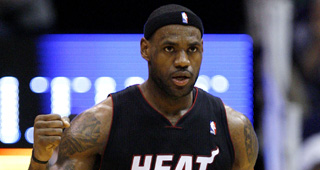
Covering a Miami Heat game on Friday provided an incredible opportunity to see both where the team is now and where they are going. The game as well as the postgame comments crystallized one core belief I have concerning Miami: they have to feature an uptempo style to reach the heights we all thought were possible when they were formed in July.
Listening to Erik Spoelstra and LeBron James after the game, the press heard the early strains of the “reward system” that has become more discussed in the ensuing days. In effect, Spoelstra is holding the carrot of offensive freedom over the heads of the team, particularly the three amigos. Unfortunately for Spoelstra and the team themselves, that is exactly the wrong way to treat playing at a faster pace.
First off, the fact of the matter remains that Miami is not a team of impressionable, moldable youth like a high school or young college team. As an alum of a school who consistently battles with a hard-edged coach and players who may or may not buy into that system, the problems with treating adults who see themselves as stars like children are numerous, but the biggest one proves to be that such an attitude is wholly unnecessary.
Both James and Dwyane Wade have played on defensive-minded teams in the very recent past, and it doesn’t seem hard to swing Chris Bosh if the other two are on board. Being controlling and patronizing may even backfire since many people react better to doing things out of necessity rather than being ordered to do it, especially if the connection between coach and player is weak.
Secondly, the choice to connect defensive stops with offensive freedom creates problems. If anyone in the NBA world should know the difference between well-coached uptempo teams and poorly coached uptempo teams, it should be Pat Riley. While the Showtime Lakers could do a wider variety of things well, they were one of the few elite teams that could excel at fast and slow paces. Encouraging more open fastbreak reinforces a problematic understanding that uptempo play gives all the control to the players. While it absolutely can and should be more open than a more plodding pace, tying defense with freedom and pace provides a flawed short-term answer as well as a pronounced long-term problem.
Finally, the biggest issue is that Miami’s personnel is infinitely better suited to run more frequently on the offensive end. This shows in not just one player or just Miami Thrice- the entire roster fits together better with the kinds of looks generated by moving quickly. Since both LBJ and Wade have problems shooting consistently on the perimeter, running more often gives them better looks and reduces their respective tendencies in terms of taking bad shots. Those effects couple with the obvious reality that both superstars are and have been top-shelf fast break players over the course of their careers in terms of creating for others and themselves. Using running as a carrot only feels like telling a Peyton Manning team they can only throw when the run is going well- what’s the point? Moving up and down more quickly also should get good looks for their shooters once Mike Miller gets back while also generating a few easy points a game for the men in the middle next to Bosh, which never hurts.
For some reason, a perception that running works only as a gimmick for teams without the personnel to play a more conventional game persists. In terms of Miami, they have already shown that they can play at a slower pace- despite being in sixth from slowest in terms of Pace Factor at this juncture, the Heat are 5th in offensive efficiency and 2nd in defensive efficiency despite having their share of problems early on in the season.
Since Miami has already established that they can be potent when the game inevitably slows down in the playoffs, it’s time to see how far pressing their strongest assets can take them. Moving faster allows the Heat to maximize their talents by creating better offensive looks and taking advantage of their athleticism.
As LeBron said after the game, “our speed is unmatched.” After all, you’ve gotta get out while you’re young.
Some other general notes on the Heat/Warriors game:
- The media circus surrounding Miami is simply incredible. As someone who has covered the Warriors for more than a season now with a press credential, it was far and away the largest media presence I’ve seen, and it was more than just having both the ESPN and the Comcast crews there for TV.
- If you’re a fringe starter or backup and don’t like doing press interviews, play for Miami. LBJ and Wade get so much attention that the other guys take it pretty easy on the press front.
- This team is going to get so much better with Mike Miller. The Warriors have a pretty glaring fatal flaw of letting the wrong guy get open on the perimeter (a problem many teams have) and Miami still needs to have a guy out there 30+ minutes a game to just bury those looks. Having a PF on the roster who can do that, or moving LBJ up a position sometimes would amplify that as well. Few other teams in recent years could do what the Heat have done with their 4th best player on the shelf for the first two months of the year.
Feel free to e-mail Daniel at [email protected] or follow him at twitter.com/DannyLeroux