RealGM Analysis

For most of the past 18 months, the Oklahoma City Thunder have operated such that it is not okay to get blown out by the Charlotte Hornets in a weekday game in January. It doesn’t matter if you’re the defending champs, if there’s an understandable hangover from both that and the holiday season, or if Brandon Miller is simply on a heater that night. It’s not okay because the Thunder are a machine that wins, and if the machine isn’t producing wins, it’s like a steamroller that can no longer flatten stuff: defective.
That’s not a very forgiving perspective. Not on the opponents, and not in the team’s own locker room and plane either. The Thunder, after such a loss—124-97, an undeniable lowpoint of the season—would do best to accept what happened gently. They are still the champs, and have earned some dog-days sagging. A two-year basketball sprint is suicidal stuff, and their chances at repeating are stronger if they learn to value games differently, as opposed to treating each and every one like it’s an existential battle for the world’s only useful resources.
They still have the best record in the sport, though the gap between them and the rest of the NBA has closed a lot in the past month, over which they’ve played a mortal, .500 brand of basketball. Teams have started taking extra care of the ball against Oklahoma City, recognizing that their offense needs a steady stream of fast-break snacks to produce at above-average levels—the Thunder are that modern kind of good shooting team, on which everyone is technically a good shooter, but almost no one is a true ace from beyond the arc. Once the paint shuts down against such teams, it turns out, the looks from deep start to bear extra stakes, and things can get shoddy—in their six losses over said month, OKC has failed to crack 110 points in any of them (if, like me, you were raised on 1990’s box scores, the following can be hard to accept, but 110 is the new dividing line between bottom-rung production and something like acceptability).
There have been injuries, but compared to their Western Conference competitors, the physical ailments for the Thunder have been minimal at worst. What’s really happening, here, is spiritual. Even for the most elite of athletic strivers, the mind and soul wander. The NBA season is too long, and as teams age, they find more and more parts of it to be lacking in ballast. OKC is still very young, but their success means they’ve aged quickly into a perspective well beyond their collective years.
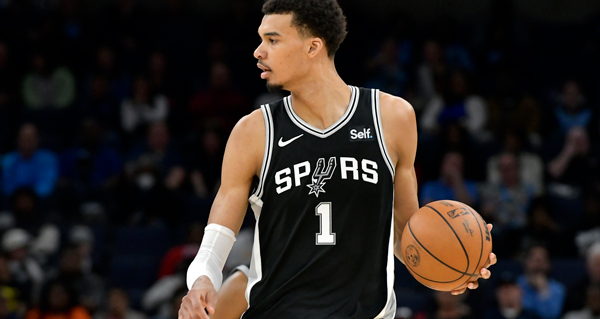
This shift in perspective has happened pretty rapidly, because they began their 2025-26 season looking like an outfit that might never show signs of beleaguerment, exhaustion, or moderated effort levels. They won their first eight games, lost one, and then went on a 16-game winning streak to kick things off at 24-1, poised to alter history with a multi-season winning pace that we haven’t seen since the Golden State Warriors won 67, 73, and 67 games in consecutive seasons about a decade ago. But then OKC lost to the San Antonio Spurs three times in just a little over one week, and in doing so, they seem to have hit a kind of wall, and laid out a blueprint for just about anyone to undo them in a single-game context.
To be clear, the loftiest of winning accomplishments are still on the table for the Thunder. They could easily shake this off, go on another monster streak, and keep those Warriors—and the Chicago Bulls of the 90’s and Los Angeles Lakers of the 2000’s—in their sights. Perhaps the Thunder really are, despite what recent days have shown us, the juggernaut who breaks the parity of the 2020’s, and restores the familiar dynastic mythology of the NBA. That was how they were discussed just a few weeks ago, and we could be back to seeing them that way quite soon.
But the more measured, sober reality we’ve been seeing is there, too: that of a team that paces itself reasonably as it prepares for the Herculean task of another run to the Larry O’Brien trophy, season after season. Even for a young, hyper-athletic crew, with even more talent on the way through its draft pipeline, this is a thing so difficult that it’s wise to take breaks and modulate intensity along the way.
All the more so for OKC, who thrive exactly because of intensity. Their high-end blitzing will be there, but they need it in May a lot more than they need it right now. They simply cannot do it every night, of every month of every year, if they want to remain whole. Perhaps Jalen Williams or Chet Holmgren take massive steps in their half-court production in the following weeks, easing the burden of Shai Gilgeous-Alexander and giving the Thunder a route to more easy wins. But that is a speculative bonus, not an expected development, and not even something the Thunder necessarily need to repeat as champions.
So until that happens, we know who they are: probably still the best team in the NBA, even if they are more human than they appeared to be in November. OKC cannot play a slow, half-court game with the best of them, but the court is 94 feet long, and they have made the most of its full potential over the past two years, and can likely do that again when the stakes get higher. Whether or not they do it right now is less significant for their mission, which remains on course regardless of how impressive they are during Winter. And so it is simply true that part of growing up—for a team that’s still way ahead of schedule, and exploring new realms of maturity—is accepting that it is, in fact, okay to get blown out by the Hornets on a Monday in January.