RealGM Analysis
The NBA regular season gets to be a ponderous exercise even for those of us who experience it casually from our couches, so it’s easy to imagine how deeply enervating the grind might get if it consumed our day-to-day lives. Playing basketball for millions is a dream job, but it is also a job, with all the tedium and monotony that suggests. In the same way we sometimes awake and greet the gray oatmeal bowl of whatever we’re doing to pay the rent—more stocking shelves, more cooking, more lawyering—with a sigh, even the most committed athletes must think to themselves that they do not, under any circumstances, want to play the Atlanta Hawks tonight, and they don’t want to fly to Charlotte afterwards either. And so, consciously or not, they sorta half-ass the Hawks game. They don’t totally listen to what the coaches are saying in the film session before the Hornets tilt. They check out slightly, wishing it were April or May, when the basketball actually matters and focusing on the task at hand isn’t itself a task.
There’s often a hint of disdain or skepticism in people’s voices when they talk about teams and players flipping the switch in the postseason. Perhaps we resent others who are able to operate at their best whenever they want to be and otherwise coast, or we have unarticulated, old school protestant ideas about the relationship between work and reward. At any rate, this time of year, there is no shortage of concerns about whether this guy or that squad can outperform their occasionally sleepy regular season selves. We’ve certainly seen it happen before. Playoff Chris Paul has been a running phenomenon for nearly a decade, and LeBron James’s Heat and Cavs teams have habitually entered standby mode in the winter before tightening things up in the spring. Shaquille O’Neal grew increasingly uninterested in the regular season through his late twenties and still won titles. Gregg Popovich’s Spurs have always played only as hard as they absolutely needed to. If the Warriors aren’t championship favorites at the moment, it’s due to Steph Curry’s knee injury, not because they have intermittently looked bored this year.
Everybody dogs it, to some extent or another, over the course of 82 games. We notice more acutely when the great ones do it because we expect brilliance from of Golden State in a way we don’t from the Nuggets, and because we know they have another gear—one that, if we don’t see it for a while, we fear might no longer exist. Maybe the switch-flipping conversation is really about anxiety. We catch the Warriors getting blown out by the Clippers and consider, for a moment, are we watching hibernation or decline? Of course, that concern fades pretty quickly. The Warriors are obviously fine, if a whit less invincible-seeming than last year. But there’s another type of team we worry about for good reason: the potential switch-flippers, who haven’t yet proven themselves.
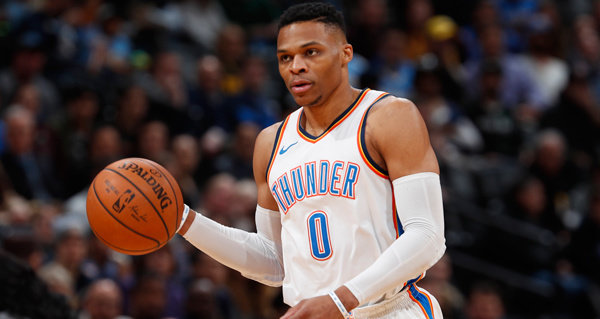
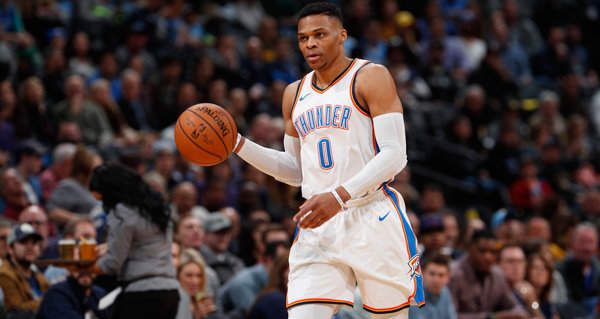
The Oklahoma City Thunder are down 3-1 to the Utah Jazz, and they don’t look like they’re coming back. The Big Three in OKC, we figured out by midseason, is actually a Big Two–Carmelo Anthony is cooked—but Russell Westbrook and Paul George are both top-20 players, and there has persisted a feeling, even while the Thunder were scuffling early in the season and only inconsistently soaring as the calendar turned over, that the they should be, if not bona fide title contenders, at least talented enough to put a scare into the Warriors or Rockets in a seven-game series. Instead, they’re on the verge of getting bounced from the playoffs by an excellently coached yet definitely undermanned Jazz team. Donovan Mitchell is an electrically atypical rookie, but it’s startling how thoroughly he’s outplaying Westbrook in his first playoff series. And while George hasn’t been bad by any stretch, he’s had just one great game at a time when the Thunder need him to dominate.
More than anything, the Thunder are what they have been all year, which is to say streaky and sloppy. They don’t move the ball well (third-to-last in assists per hundred possessions this season), which is a problem against a well-organized defense like Utah’s. They can lock other teams down for a few minutes at a time, but struggle to stay locked in for entire contests. (Ninth in defensive rating.) They run hot and cold from behind the three-point line, and that hasn’t changed. (14-for-29 from deep in their Game 1 win, 5-for-26 in their Game 4 loss.) When the Thunder need a bucket, they’re much more likely to rely on Russ barreling through the lane or, worse, launching a contested three, than they are to run a set that gets them an easy layup. In short, they’re a middle of the road team that can ascend to stratospheric heights when one of their two stars is playing out of his head. But that’s not a reliable strategy. Against the Jazz, a squad that don’t beat themselves, it can lead to ruin—and it has.
After Ricky Rubio picked up a triple-double in Game 3, Russ lamely announced in his postgame presser, that he was going to shut that s--- down. He sort of did—Rubio was 4-for-12 with eight assists on Monday night—but he also picked up four first half fouls because the fact is, Russ is a sub-par defender. He spends most games unengaged, sticking to screens and hunting for steals, and it turns out, when he gets to the playoffs, though he’s immensely physically gifted, he can’t simply transform himself into a stopper, because he hasn’t prepared for it. Russ, for all his merits, is convinced that whatever shortcomings he has can be fixed immediately through effort. This is a strange thing to say about a stat-chaser who believes strongly in the persuasive power of regular season numbers, but perhaps no star in the league believes less in the utility of November and January and March basketball as a means of fine-tuning what will need to work perfectly in the playoffs. Russ thinks he can figure it out when it matters; he doesn’t see much point in prepping.
And in part because he’s the immensely strong personality around which the Thunder are ordered, they now look no better than they did several months ago while the Jazz are finding a new level in the postseason. (A hefty amount of blame belongs to Billy Donovan, too.) Those of us who were wondering if Oklahoma City might have flipped a switch last week are faced with a question that, in retrospect, we should have been asking all along: has it ever looked like the Thunder were constructing a switch in the first place. Because you can’t become what you’re not developing toward. You can’t turn on a light that isn’t hooked up anything, no matter how bright you imagine it might shine.